Royal refuge at the Russian legation
Gojong slipped out of Gyeongbokgung with the crown prince and moved into the Russian legation, where he stayed a year and formed a pro-Russian cabinet.
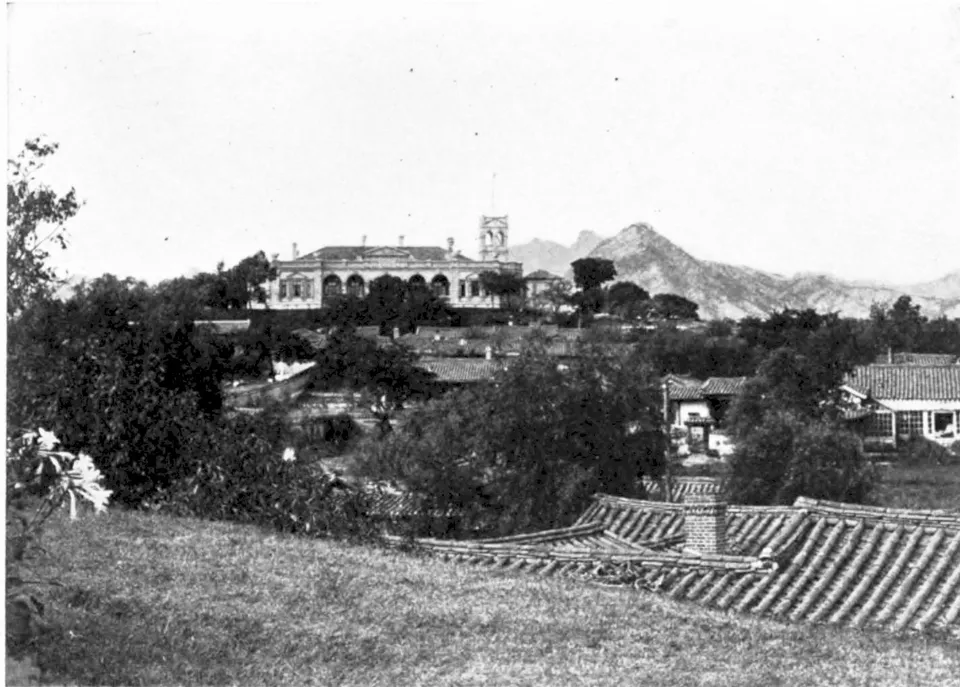
Homer B. Hulbert, The Passing of Korea (1906) · Public domain · Source
The queen’s murder and the topknot ban had inflamed anti-Japanese feeling, and with palace guards sent to fight the righteous armies Seoul was thinly defended. Pro-Russian officials such as Yi Beom-jin and Yi Wan-yong plotted with the Russian minister Karl Waeber, and Gojong and the crown prince left Gyeongbokgung in court ladies’ palanquins for the Russian legation in Jeong-dong.
The pro-Japanese Kim Hong-jip cabinet collapsed; Kim Hong-jip and Eo Yun-jung were killed by angry crowds and Yu Gil-jun and others fled to Japan. The new pro-Russian cabinet rescinded the topknot ban and urged the righteous armies to disband.
Russian influence grew, and the powers used most-favoured-nation clauses to seize concessions: Russia won timber rights on the Yalu and Tumen and on Ulleungdo, and the United States the Unsan gold mine and the Seoul–Incheon railway. Under pressure from the Independence Club and others, Gojong returned to Gyeongungung in February 1897.
