The Antarctic Treaty
Twelve nations with stations in Antarctica signed the Antarctic Treaty in Washington, reserving the continent for peace and science, freezing territorial claims and banning military activity and nuclear explosions.
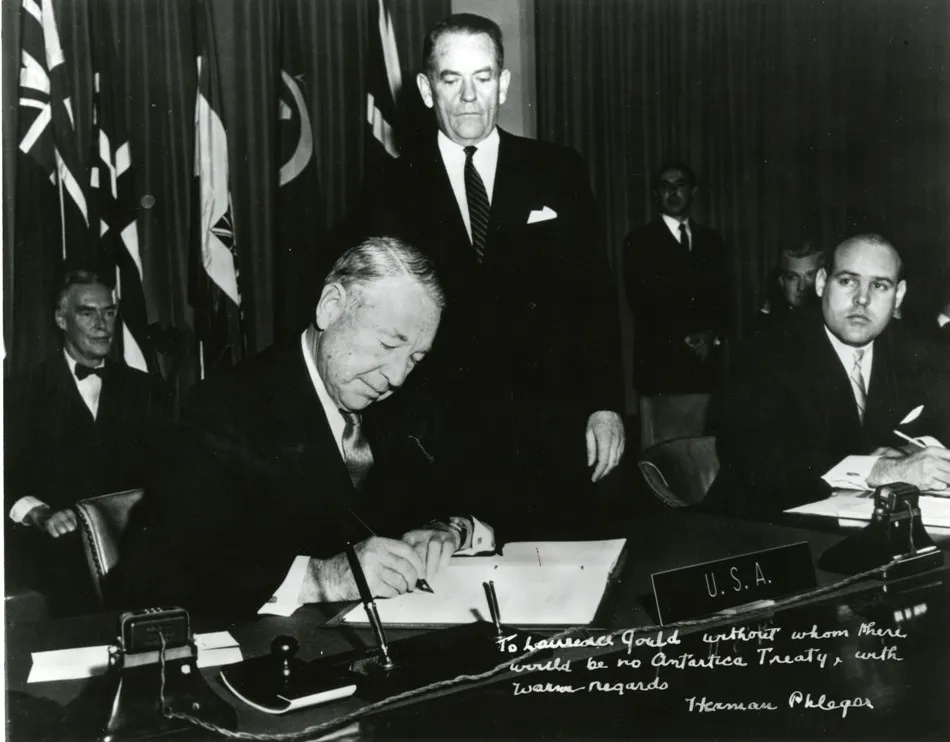
Herman Phleger · Public domain · Source
In the first half of the twentieth century Britain, Norway, France, Australia, New Zealand, Chile and Argentina carved Antarctica into claimed territories, some of them overlapping. When twelve nations, the United States and the Soviet Union among them, set up stations and observed together in the International Geophysical Year of 1957–58, talks began on keeping that cooperation going.
Signed in Washington on 1 December 1959, the Antarctic Treaty came into force in 1961. Antarctica was to be used only for peaceful purposes, scientific research would be free and its results shared, and territorial claims were frozen, neither enlarged nor given up. One of the first arms-control agreements of the Cold War, it now has more than fifty member states.