Conflict219 – 220

Battle of Fancheng and the Death of Guan Yu

Liu Bei’s general Guan Yu besieged Wei-held Fancheng and drowned its relief army, but Wu’s Lü Meng meanwhile seized Jing Province behind him. Guan Yu was captured and killed, and the Shu–Wu alliance broke.
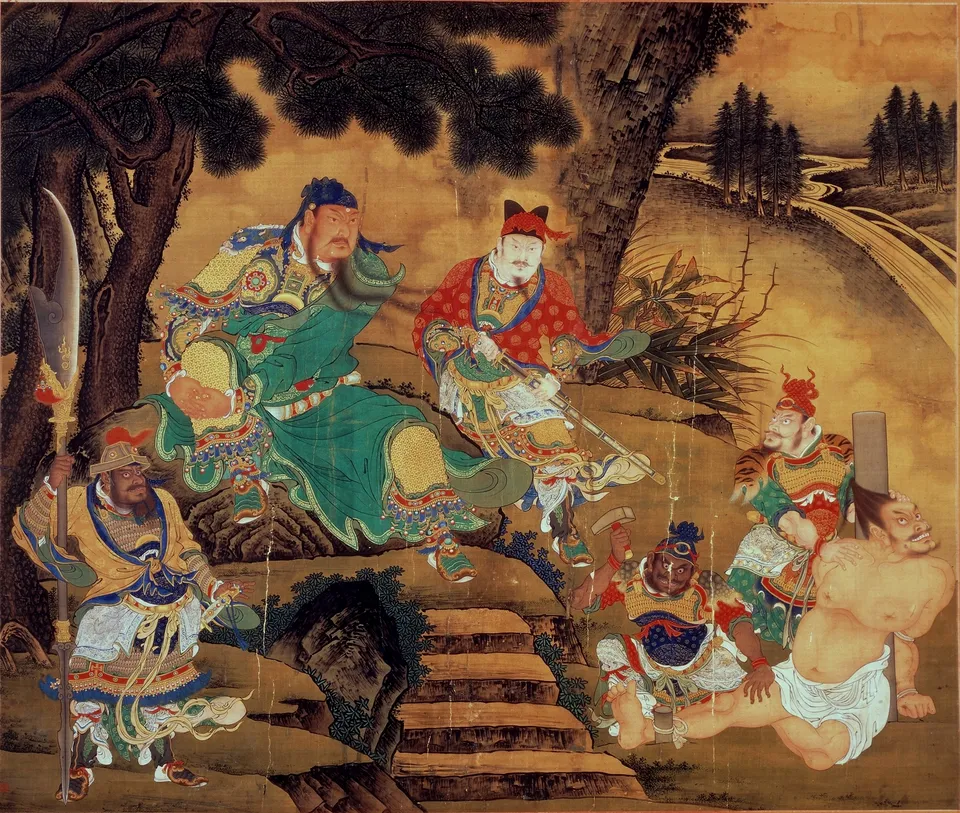
Guan Yu Captures Pang De — the Wei general taken in the Fancheng campaign, painting by the Ming artist Shang Xi

Shang Xi · Public domain · Source

In 219 Guan Yu advanced north from Jing Province and besieged Fancheng, held by Cao Ren. Heavy rains flooded the Han River, and the seven armies of Yu Jin’s relief force were drowned and surrendered, shaking the north. But Sun Quan, who coveted Jing, sent Lü Meng to strike Guan Yu’s rear; cut off, Guan Yu was captured near Maicheng and executed early in 220. The loss of Jing was a heavy blow to Shu and led to Liu Bei’s campaign against Wu at Yiling.

The map in AD 219

OpenFreeMap © OpenMapTiles © OpenStreetMap contributors

States at the time
Han
Places
Xiangyang

People

  • Guan YuAD 220

    commander · Liu Bei’s general, who attacked Fancheng in 219 but lost Jingzhou to Wu’s Lü Meng and was captured and killed; later worshipped as Guandi

  • Cao CaoAD 155 – AD 220

    related figure · Chancellor and King of Wei in the late Han, who controlled Emperor Xian, defeated Yuan Shao at Guandu and unified the north, laying the foundation of Wei

  • Sun QuanAD 182 – AD 252

    related figure · Founding emperor of Wu (Emperor Da), who allied with Liu Bei to stop Cao Cao at Red Cliffs and became emperor in 229

1 part of this event

  1. A scene from the Romance of the Three Kingdoms in which the physician Hua Tuo scrapes the poison from Guan Yu’s arm at Fancheng. The operation is in the history, but not Hua Tuo.

Before and after

Earlier
AD 208 Battle of Red Cliffs

Themes that include this event

  • The Three KingdomsAD 184 – AD 280

    From the Yellow Turban Rebellion to the Jin reunification — a century of Wei, Shu and Wu, the age of Cao Cao, Liu Bei and Sun Quan