The Death and Apotheosis of Heracles
Also called: Shirt of Nessus, Apotheosis of Heracles, Deianira
A legend handed down over the centuries.
A Greek myth told in Sophocles’ tragedy Women of Trachis and Book 9 of Ovid’s Metamorphoses, among others. When a robe soaked in the blood of the centaur Nessus — sent by his wife Deianira, who thought it a love charm — burned his flesh, Heracles had a pyre built on Mount Oeta, mounted the flames and rose to Olympus as a god.
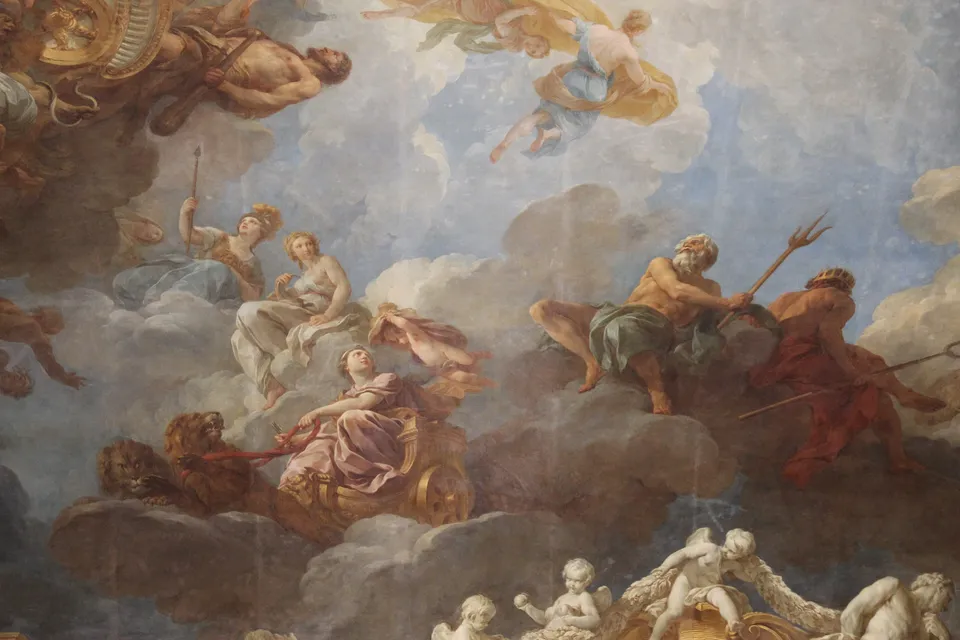
This Greek myth is told in Sophocles’ tragedy Women of Trachis, Apollodorus’ Bibliotheca and Book 9 of Ovid’s Metamorphoses, among others. When the centaur Nessus, ferrying Heracles’ wife Deianira across a river, tried to assault her, Heracles shot him with an arrow dipped in the Hydra’s poison. The dying Nessus deceived her, saying his blood would keep her husband’s love.
Later, when Heracles brought home the princess Iole, Deianira sent him a robe smeared with the blood. As soon as he put it on, the poison began to burn his flesh. He had a pyre built on Mount Oeta and lay down on it; when no one else would light it, Philoctetes (or his father), passing by, set it alight and was given Heracles’ bow — the weapon later needed for the fall of Troy. Deianira took her own life.
In the flames his mortal body was consumed, and Heracles rose to Olympus as a god, was reconciled with Hera and married her daughter Hebe. Book 11 of the Odyssey says that his shade is in the underworld while he himself dwells among the gods. As a mortal who became a god, he was worshipped across Greece as both hero and god.