Founding of Gojoseon
Also called: Dangun myth, Dangun Joseon
Dangun Wanggeom is said to have founded Gojoseon, the first Korean state, with its capital at Asadal.
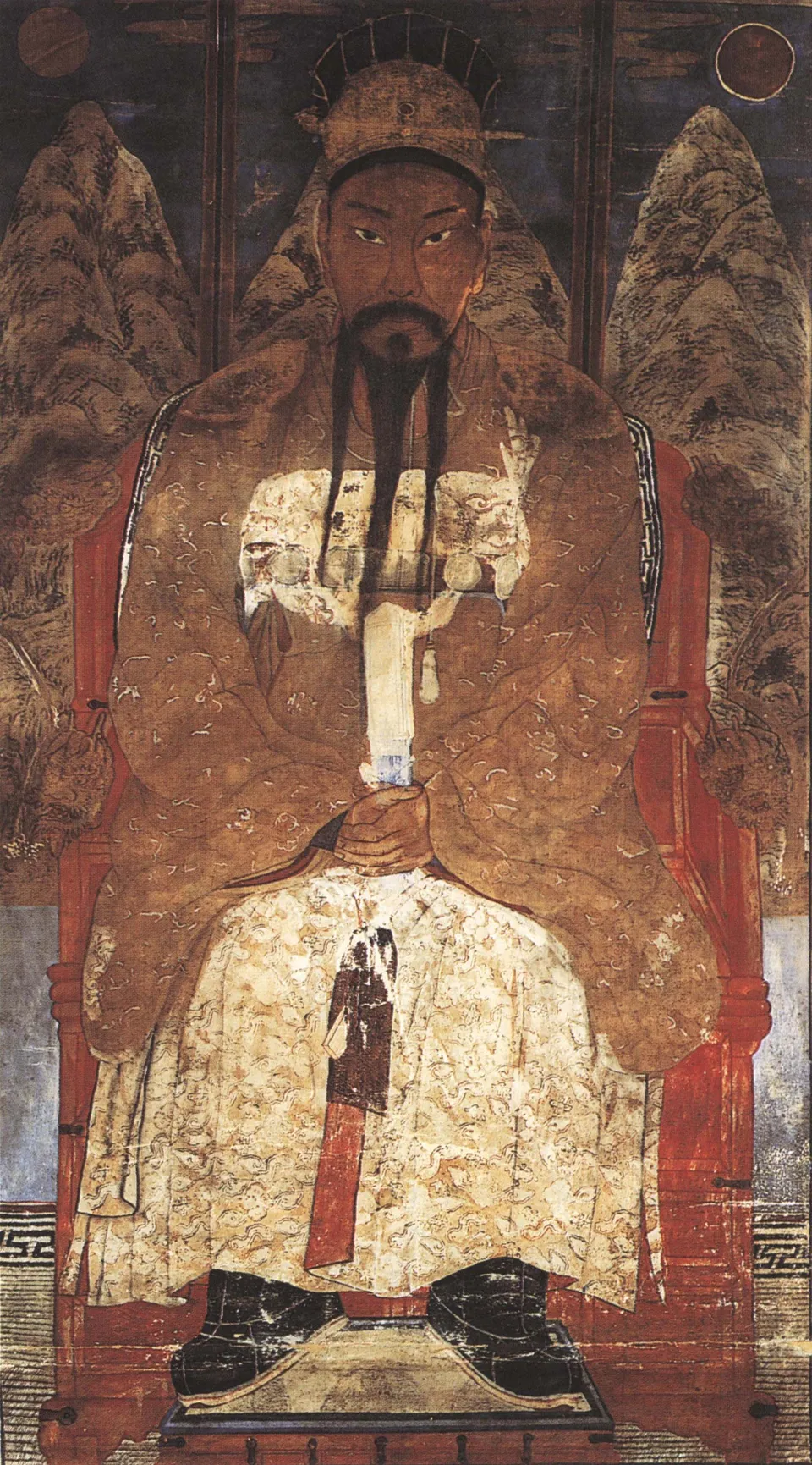
Chae Yong-sin (1850-1941) · Public domain · Source
The Samguk yusa dates the founding of Gojoseon to 2333 BCE. Hwanung, son of Heaven, descended to the sacred tree on Mount Taebaek to "broadly benefit humankind" (hongik ingan) and married a bear who had become a woman; their son was Dangun Wanggeom.
The myth is read as a union of sky-worshipping migrants and bear-totem natives in a farming society, ruled by a single figure who was both priest (Dangun) and king (Wanggeom).
Historians date Gojoseon’s growth into a state to the Bronze Age; the spread of mandolin-shaped daggers, table-type dolmens and Misong-ri pottery is taken to mark its sphere. Whether Asadal lay at Pyongyang or in Liaodong is debated.
The Dangun story was first written down in late Goryeo, in Iryeon’s Samguk yusa (c. 1281) and Yi Seung-hyu’s Jewang ungi (1287). Joseon recorded it in the geography section of the Annals of King Sejong and honoured Dangun as founder at a shrine in Pyongyang; Korea’s National Foundation Day (3 October) also comes from it.