Politics221

Founding of Shu Han

Liu Bei became emperor at Chengdu, claiming to continue the Han dynasty; historians call his state Shu Han or Shu.
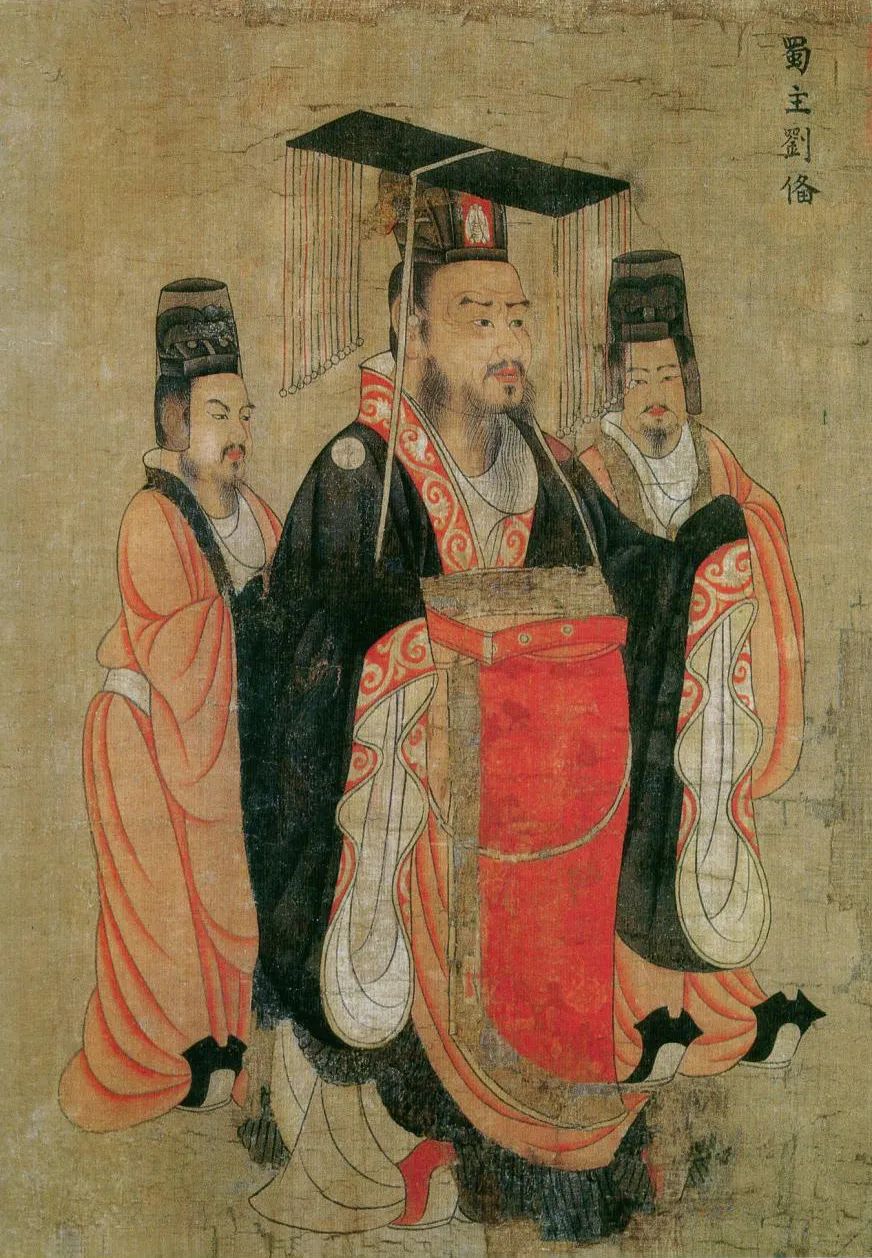
Liu Bei, Emperor Zhaolie of Shu Han — Yan Liben, Thirteen Emperors Scroll

Yan Liben (閻立本) · Public domain · Source

After Red Cliffs Liu Bei took southern Jing Province, seized Yi Province (modern Sichuan) in 214 and Hanzhong in 219, styling himself King of Hanzhong. On hearing that Cao Pi had founded Wei, he declared himself emperor at Chengdu in the fourth month of 221 and named his state Han, asserting the legitimacy of the Han house. Historians call it Shu Han to distinguish it from the earlier Han. Zhuge Liang became chancellor.

The map in AD 221

OpenFreeMap © OpenMapTiles © OpenStreetMap contributors

States at the time
Shu Han · founded
Places
Chengdu

People

  • Liu BeiAD 161 – AD 223

    monarch · Founding emperor of Shu Han (Emperor Zhaolie), who claimed descent from the Han house and became emperor at Chengdu in 221

  • Zhuge LiangAD 181 – AD 234

    participant · Chancellor of Shu Han, who proposed the plan to divide the realm in three to Liu Bei in 207 and died of illness on the Wuzhang Plains in 234 during his northern campaigns

Before and after

Later
AD 222 Battle of Yiling

Themes that include this event

  • The Three KingdomsAD 184 – AD 280

    From the Yellow Turban Rebellion to the Jin reunification — a century of Wei, Shu and Wu, the age of Cao Cao, Liu Bei and Sun Quan