Goryeo Mother-of-pearl Lacquerware
Also called: Najeon chilgi
Lacquered ware inlaid with thin pieces of abalone and shell cut into patterns — so fine that a Song envoy singled it out for praise.
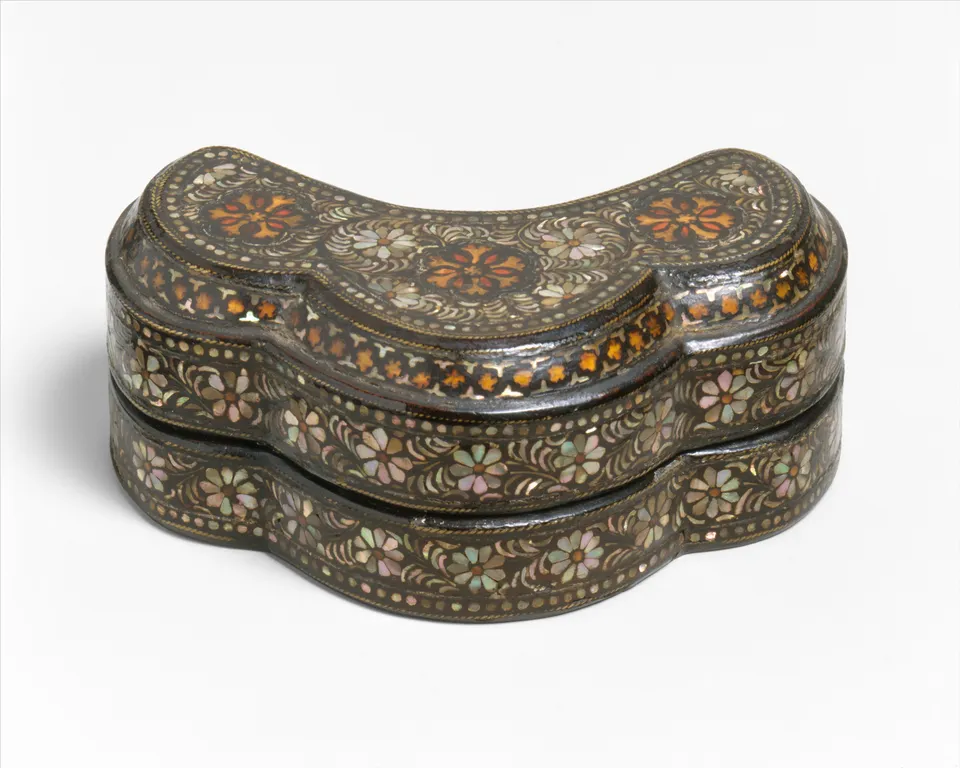
A wooden core was lacquered many times; thin pieces of abalone and shell were cut into chrysanthemum and scroll motifs and set in, then lacquered and polished again to reveal the design. Goryeo work is marked by tiny densely set pieces, combined with reddish tortoiseshell and metal wire. The Song envoy Xu Jing, visiting in 1123, wrote that the mother-of-pearl work was fine and precious.
Sutra boxes and cosmetic boxes survive, but they are few and mostly abroad. Under Yuan domination an office was even set up to make sutra boxes. The principle of inlay links it with inlaid celadon and silver-inlaid bronze, and the craft continued under Joseon.