Great Pyramid of Giza
Built as the tomb of the pharaoh Khufu. It is the only one of the Seven Wonders of the Ancient World still standing.
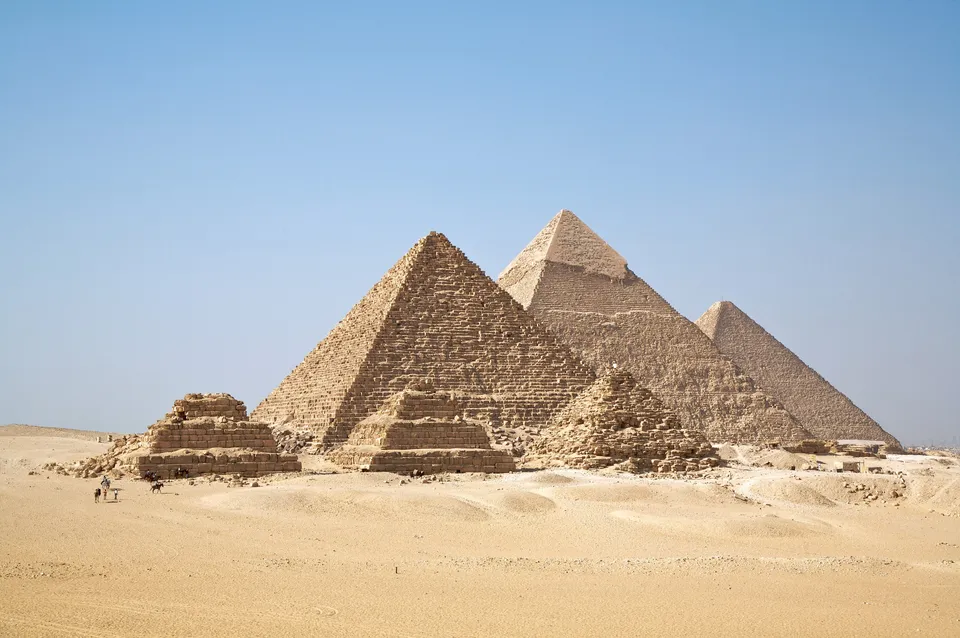
Ricardo Liberato · CC BY-SA 2.0 · Source
The regular flooding of the Nile allowed agriculture to develop early in ancient Egypt, and a unified kingdom arose around 3000 BC. The pharaoh was a living god, honoured as son of the sun god, and because Egyptians believed the soul lived on after death they mummified the dead and built tombs with great care.
Built at Giza for Khufu of the Fourth Dynasty in the Old Kingdom, the Great Pyramid originally stood about 146 m high (about 139 m today) and is estimated to contain some 2.3 million blocks averaging around 2.5 tonnes. Beside it stand the pyramids of his successors Khafre and Menkaure, guarded by the Great Sphinx, generally attributed to Khafre’s reign.
Most scholars now think the pyramids were built not by slaves but by skilled craftsmen organised by the state and peasants called up in rotation, since the workers’ village and tombs have been excavated nearby. For some 3,800 years the Great Pyramid was the tallest human-made structure, a testament to the power of the pharaohs and the surveying and building skills of ancient Egypt.