Inlaid Celadon
Goryeo fired pure jade-green celadon in the 11th century and by the mid-12th century invented inlaid celadon, filling carved designs with white and red clay.
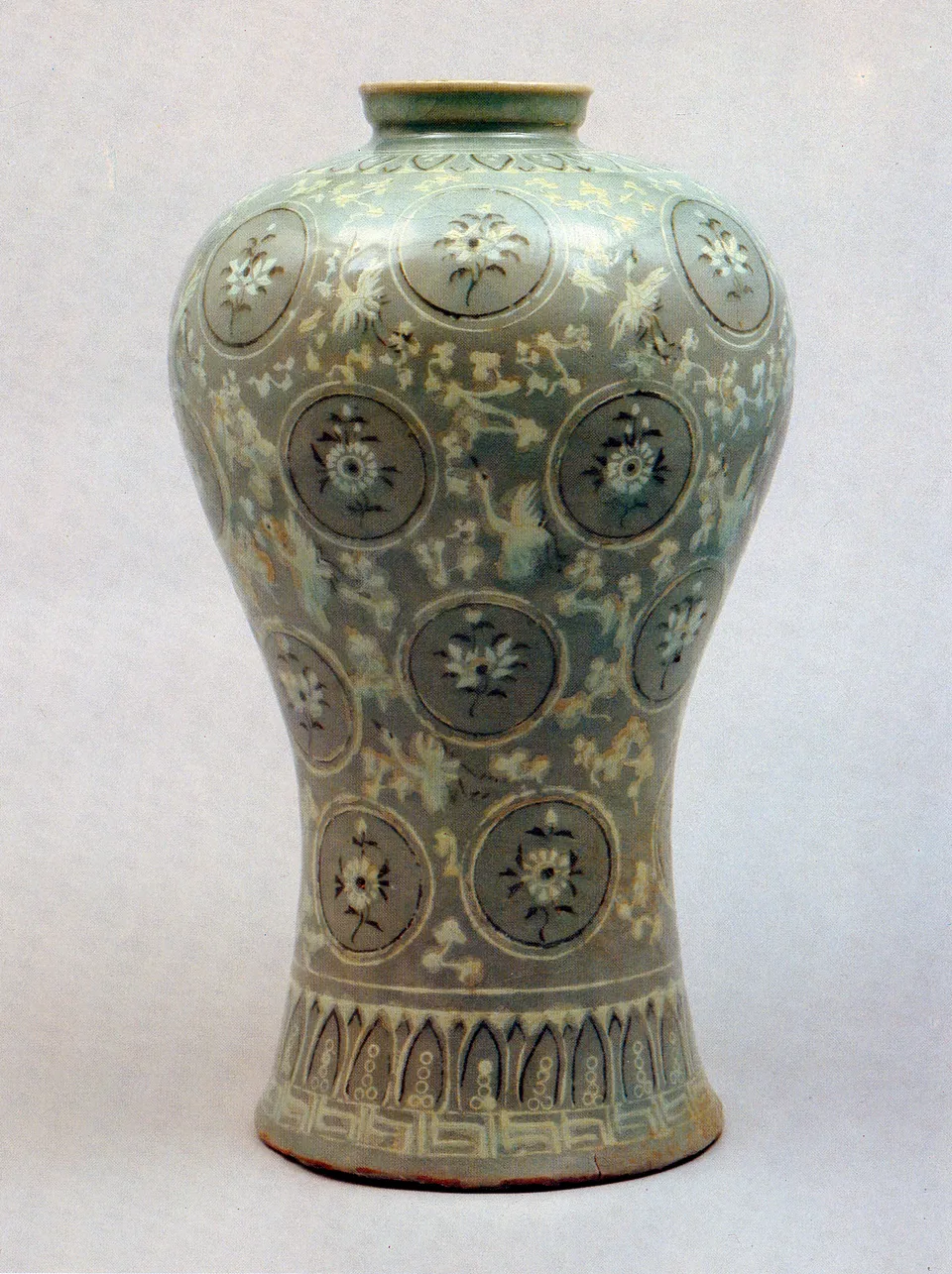
Unknown author · Public domain · Source
Xu Jing, a Song envoy who visited in 1123, praised the "kingfisher colour" (bisaek) of Goryeo celadon in his Gaoli tujing. By the mid-12th century potters were incising designs and filling them with white and red clay that fired white and black — the same principle as mother-of-pearl lacquer and silver inlay. The maebyeong vase with inlaid cranes and clouds is the classic example.
The main kilns were at Gangjin and Buan in Jeolla. Quality declined after the period of Yuan domination, and celadon gave way to buncheong ware in late Goryeo and early Joseon.