Innocent III and the Height of Papal Power
Also called: Fourth Lateran Council, Papal monarchy
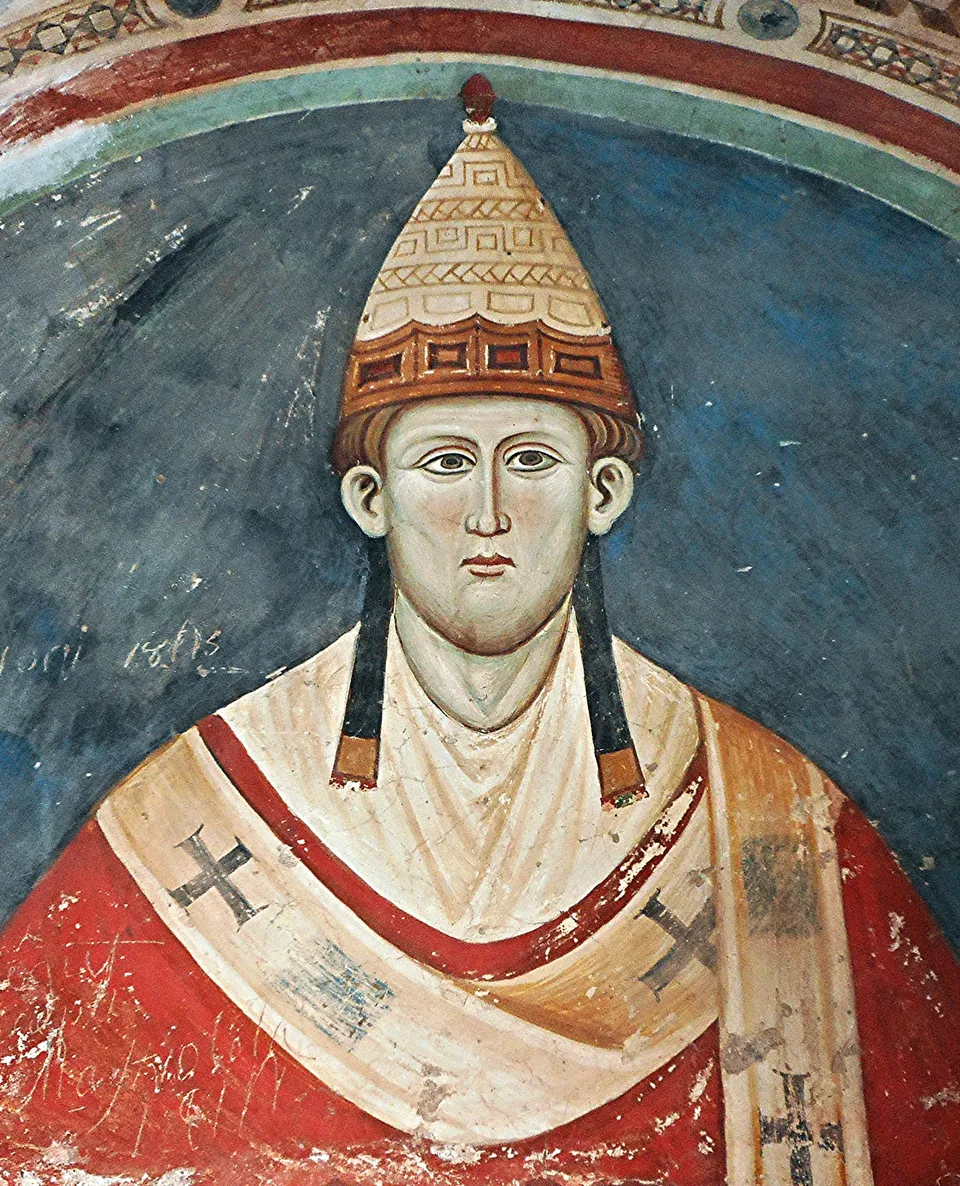
Innocent III, pope from 1198, likened the pope to the sun and the emperor to the moon and brought papal power to its height by humbling the kings of England and France and the Holy Roman Emperor.
Carlo Raso · Public domain · Source
Elected pope while still in his thirties, Innocent III declared that papal authority was like the sun and royal power like the moon that borrows its light. He intervened in the struggle for the imperial throne, making and excommunicating emperors before finally backing Frederick II, and forced King Philip II of France, who had set aside his wife, to take her back by placing France under interdict. When King John of England refused his choice of archbishop of Canterbury he excommunicated him, and in 1213 John surrendered England to the pope and received it back as a papal fief.
He launched the Fourth Crusade and a crusade against the Albigensians of southern France, and in 1215 held the Fourth Lateran Council, which ordered yearly confession and reformed doctrine and church institutions. He also approved the Franciscans, who preached poverty. Papal power, however, was badly broken in the early 14th century by the Anagni incident and the Avignon papacy. At the same time in Goryeo, Choe Chung-heon consolidated military rule (1196), and his slave Manjeok plotted to free the lowborn (1198).