Disbandment of the Korean Army
Japan forcibly disbanded the Korean army. When battalion commander Park Seung-hwan took his own life, the guards fought Japanese troops around Namdaemun, and disbanded soldiers joined the righteous armies.
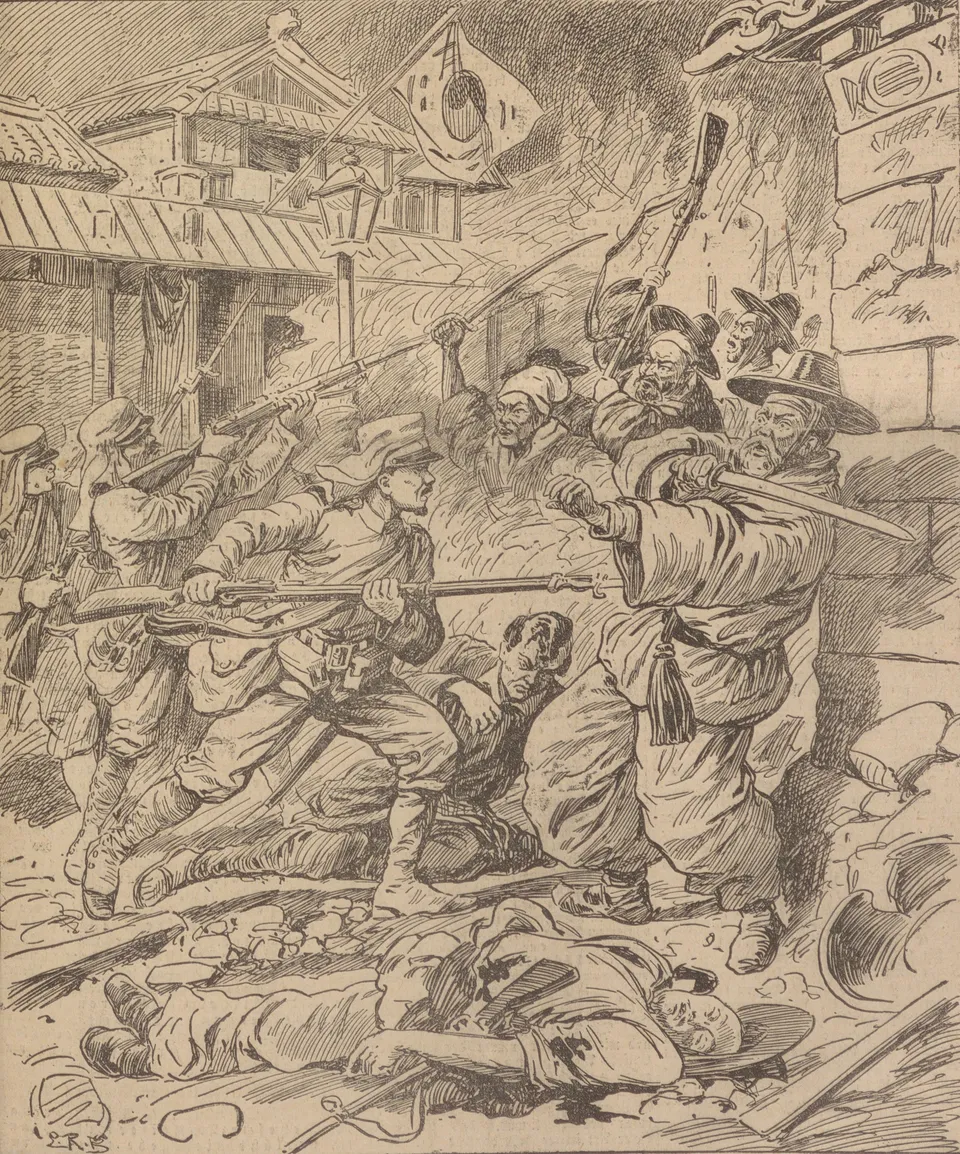
Ladislaus Richard Barteau · Public domain · Source
Japan gathered the soldiers at the training ground, unarmed for supposed drill, and held the disbandment ceremony. When Park Seung-hwan, commander of the 1st Battalion, 1st Guards Regiment, killed himself leaving the note "a soldier who cannot defend his country deserves ten thousand deaths", his men broke into the armoury and fought the Japanese in the streets around Namdaemun.
Provincial units such as the Wonju garrison and the Ganghwa detachment also resisted. The disbanded soldiers greatly strengthened the righteous armies (the Jeongmi righteous armies).