Lavoisier and the Chemical Revolution
Also called: Traité élémentaire de chimie, Conservation of mass, Chemical Revolution
In 1789 Lavoisier published his Elementary Treatise of Chemistry, establishing the conservation of mass and combustion by oxygen and ordering the concept of the elements — the founding of modern chemistry.
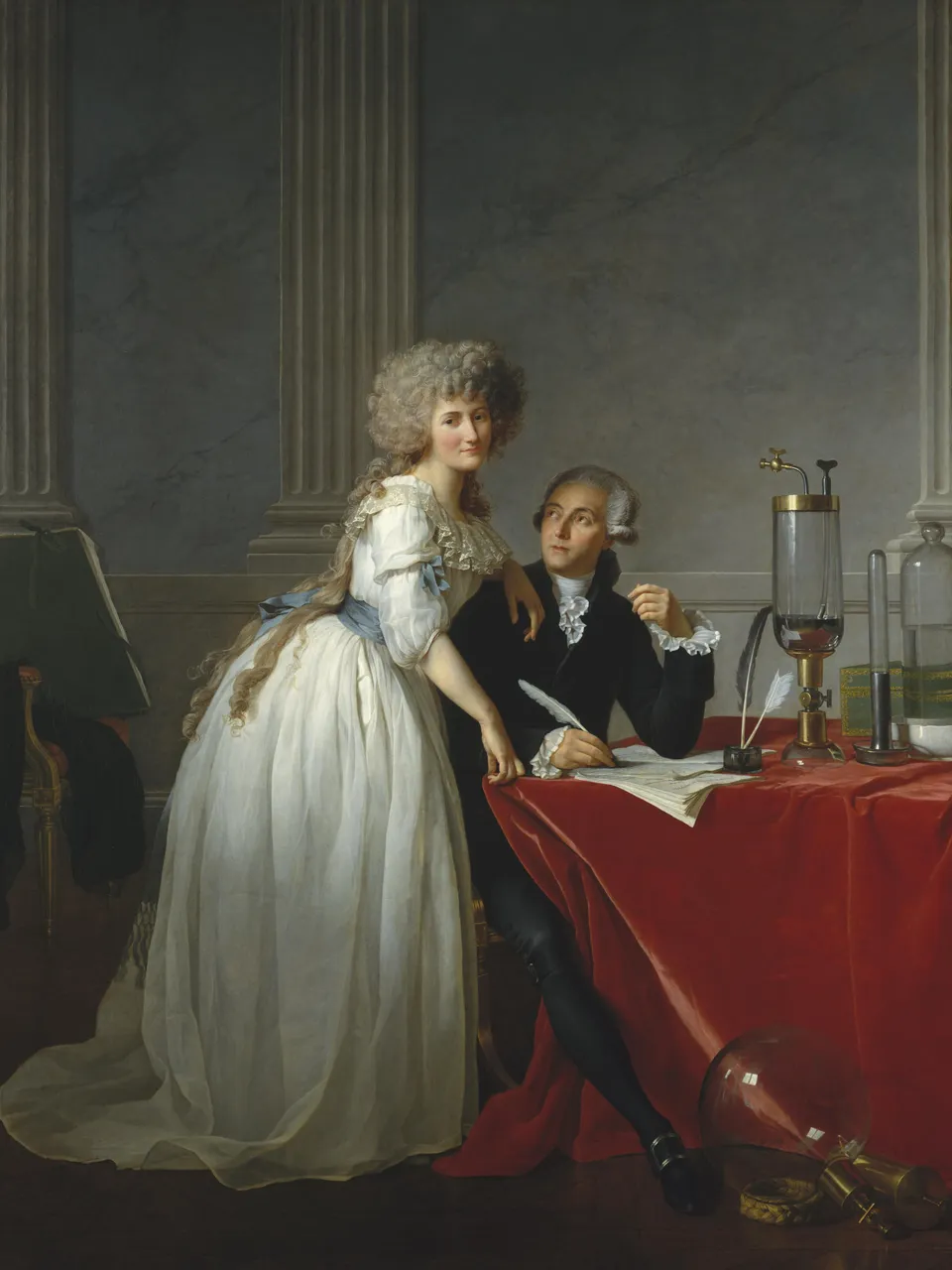
Jacques-Louis David · Public domain · Source
Weighing substances before and after reactions with precise balances, Lavoisier showed that the total mass of matter is unchanged in a chemical reaction — the law of conservation of mass. He discarded the old theory that burning releases “phlogiston”, explaining combustion as combination with the oxygen in the air, and coined the names oxygen and hydrogen and a new chemical nomenclature. In his Elementary Treatise of Chemistry of 1789 he listed 33 elements.
Yet because he had been a tax farmer, collecting taxes under the monarchy, he was guillotined during the Revolution in 1794.