Mansa Musa’s Pilgrimage to Mecca
Also called: Hajj of Mansa Musa
Mansa Musa, king of Mali in West Africa, made the pilgrimage to Mecca with a vast retinue and a great deal of gold. Mali’s wealth became so famous that the price of gold was said to have fallen in Cairo, where he passed through.
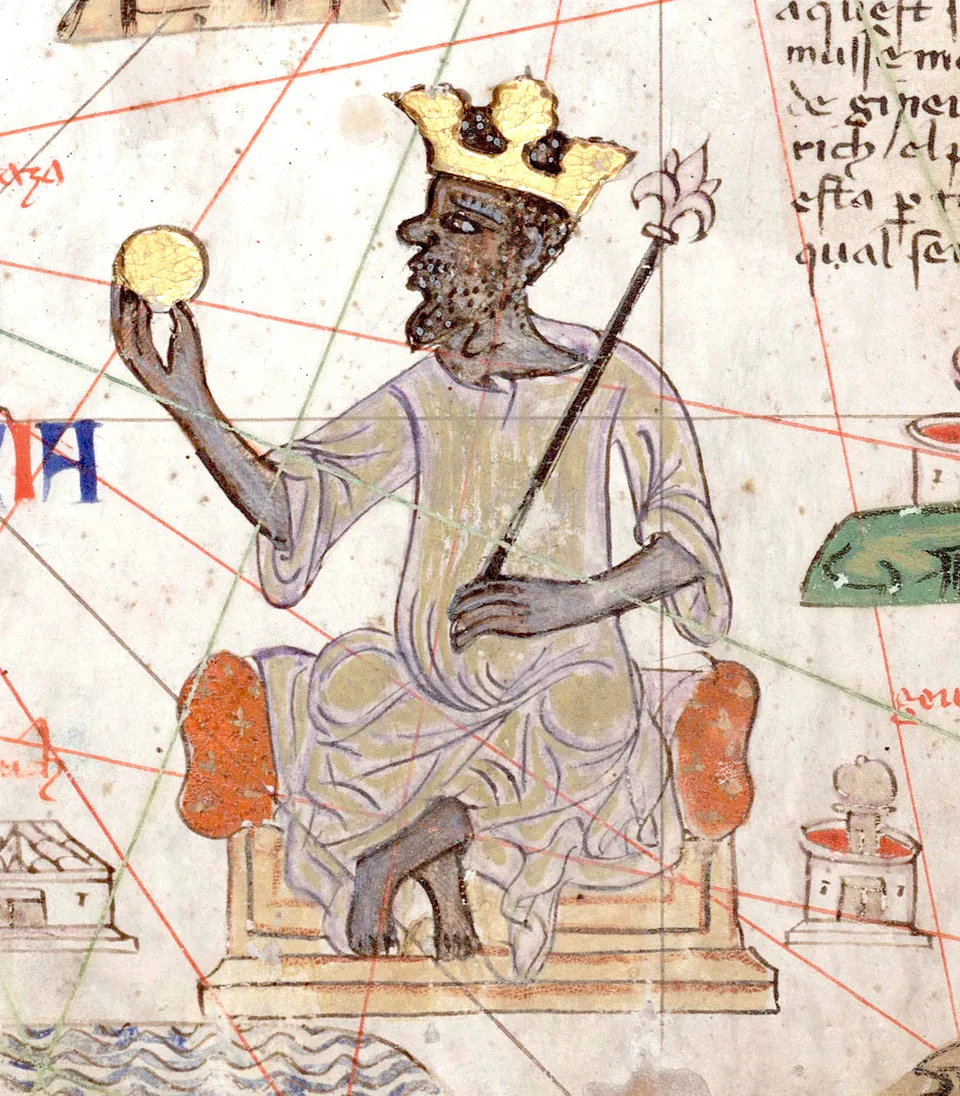
attributed to Abraham Cresques · Public domain · Source
The Mali Empire, founded by Sundiata Keita in the early 13th century, succeeded Ghana as the power of the Niger basin. It grew rich by controlling the trans-Saharan trade that exchanged gold from the south for Saharan salt, and its rulers adopted Islam through the Muslim merchants who used these routes.
In 1324 Mansa Musa set out for Mecca with a huge retinue and great quantities of gold. He spent and gave away so much during his stay in Cairo that, according to the Mamluk historian al-Umari, the price of gold there stayed low for years. On the way back he brought scholars and an architect to Mali and built the Djinguereber Mosque at Timbuktu, which became a centre of trade and Islamic learning. The European Catalan Atlas of 1375 shows the king of Mali holding a nugget of gold. Mali declined in the 15th century and was succeeded by the Songhai Empire.