Promulgation of the Meiji Constitution
Also called: Meiji Constitution, Constitution of the Empire of Japan
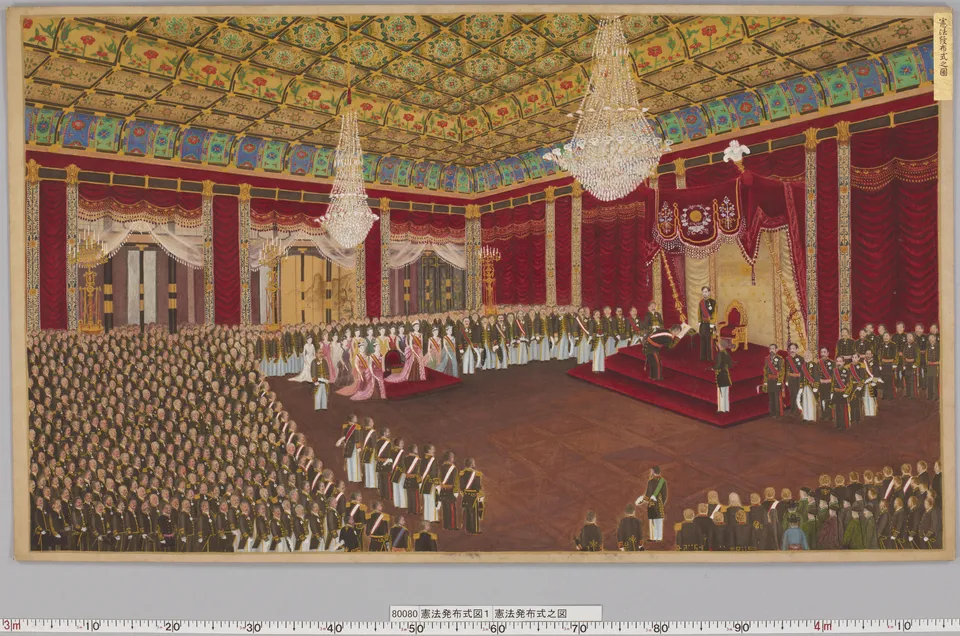
Japan promulgated the first modern constitution in East Asia and opened the Imperial Diet the following year. It was a constitution granted by the emperor, in whom sovereignty resided.
Tokonami Masayosi(1842-1897) · Public domain · Source
Having promised a parliament under pressure from the Freedom and People’s Rights Movement, the government sent Itō Hirobumi to Europe to study the constitution of Prussia (Germany), which gave the monarch strong powers. A cabinet system was set up in 1885 with Itō as the first prime minister, and on 11 February 1889 the Constitution of the Empire of Japan was promulgated as a gift from the emperor.
The emperor was sacred and inviolable and held sovereignty, supreme command of the armed forces and the treaty power; the cabinet answered to him rather than to parliament. The Imperial Diet, with a House of Peers and a House of Representatives, opened in 1890, but only men aged 25 or over paying more than 15 yen in direct tax — just over 1 per cent of the population — could vote for the lower house. The Imperial Rescript on Education of the same year taught loyalty to the emperor. The new constitutional order helped Japan win revision of the unequal treaties; in Korea, the Korean Empire proclaimed its own charter stressing imperial power, the Daehan Gukje, in 1899.