Montesquieu’s The Spirit of the Laws
Also called: The Spirit of the Laws, De l’esprit des lois, Separation of powers
In 1748 Montesquieu published The Spirit of the Laws, arguing that liberty is safe only when power is divided into legislative, executive and judicial branches that check one another — the separation of powers.
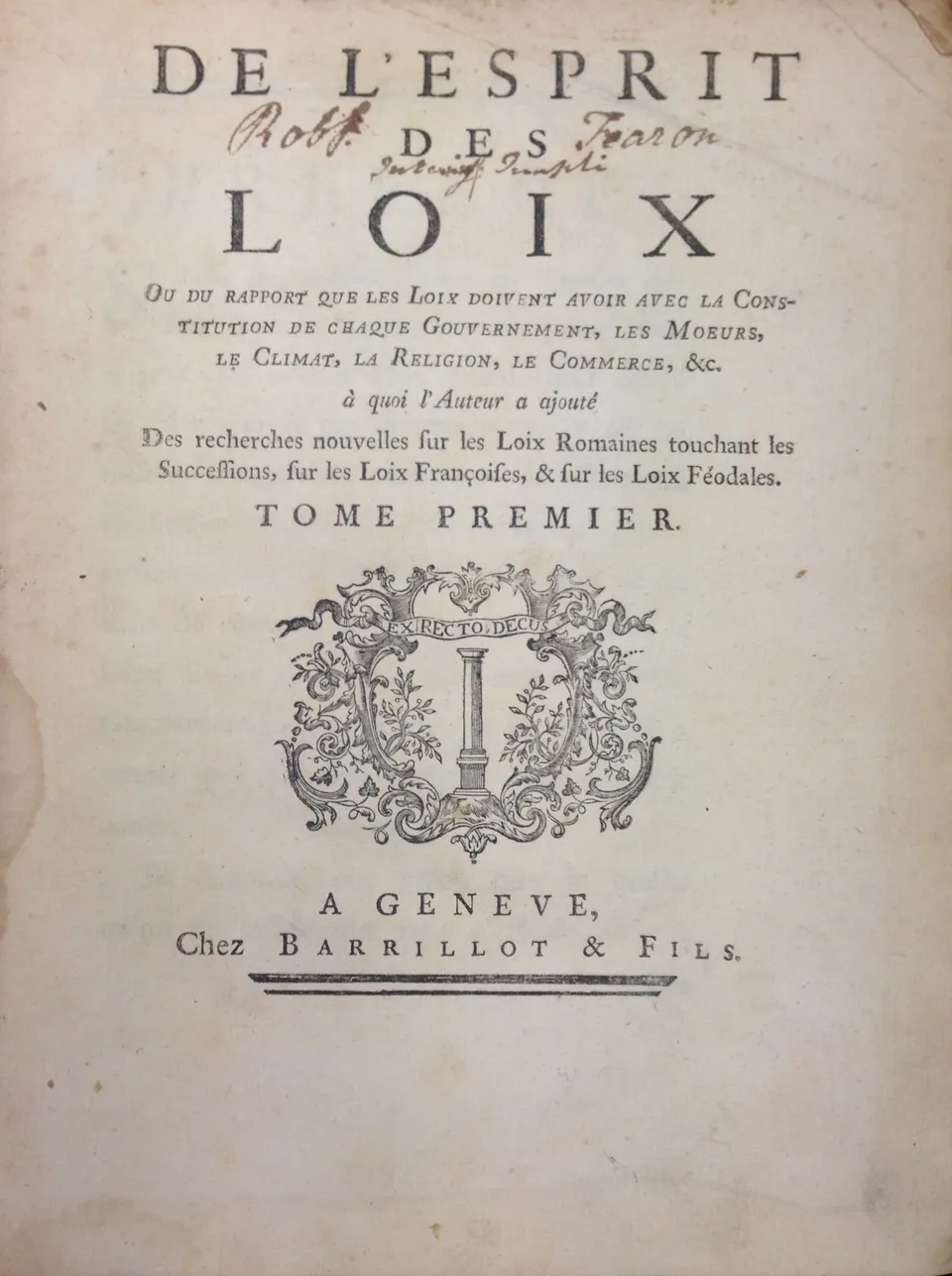
Smuconlaw . · Public domain · Source
Montesquieu, a nobleman who had presided over the parlement of Bordeaux, satirised French society in his Persian Letters (1721) and studied parliamentary government during a stay in England in 1729–1731. After nearly twenty years of work he published The Spirit of the Laws at Geneva in 1748.
He divided governments into republics, monarchies and despotisms, and held that laws must suit a country’s climate, land and customs. Above all, since liberty vanishes when one person or body holds all power, he argued that legislative, executive and judicial power must be separated so that they check and balance one another. This doctrine of the separation of powers became a basis for criticising French absolute monarchy and a founding principle of the United States Constitution of 1787 and of modern constitutions.