Peace of Westphalia
Also called: Treaty of Westphalia, Peace of Münster, Westphalian system
The treaties concluded at Münster and Osnabrück in 1648 ended the Thirty Years’ War, recognised Calvinism and the independence of Switzerland and the Netherlands, and opened the modern order of sovereign states standing side by side.
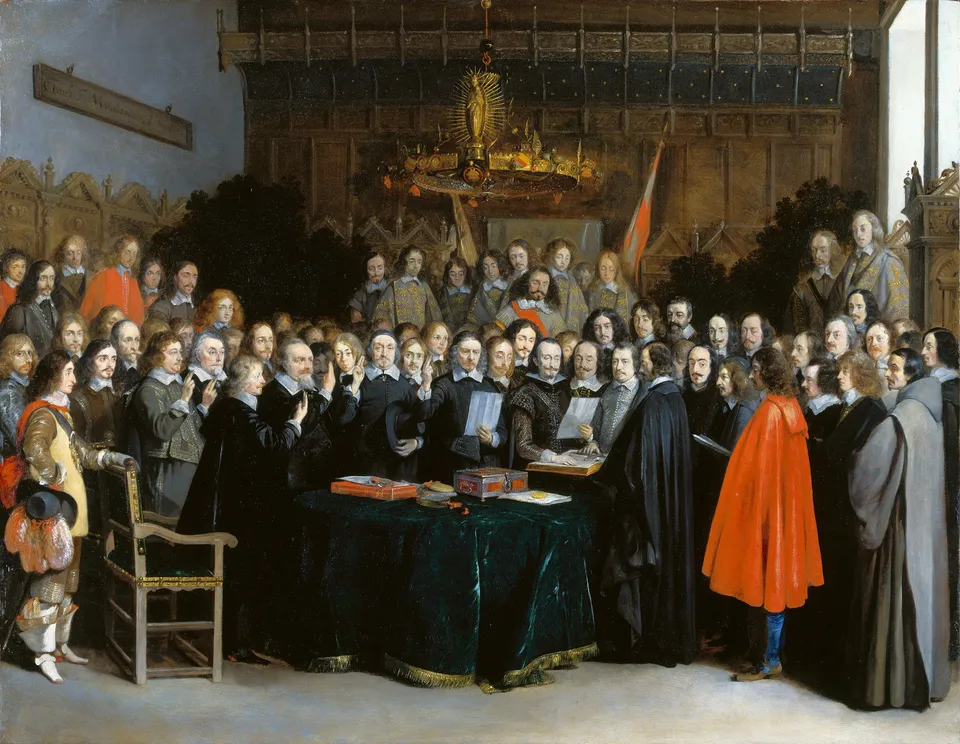
Gerard ter Borch · Public domain · Source
After envoys from across Europe had negotiated for years in two Westphalian towns, Spain recognised Dutch independence at Münster in January 1648, and on 24 October the treaties between the emperor and France and Sweden were signed. It was the first international congress to gather most of the states of Europe.
Building on the Peace of Augsburg, the settlement recognised Calvinism as well. The 300-odd princely states of the Holy Roman Empire gained even the right to make alliances, becoming sovereign in all but name, while the emperor’s authority became largely nominal. Switzerland and the Netherlands won formal independence, France gained most of Alsace, and Sweden won Western Pomerania and other Baltic coastlands.
It opened the “Westphalian system”, in which sovereign states rather than pope and emperor kept a balance of power among equals, and left Germany divided for a long time. The following year (1649) King Hyojong came to the throne in Joseon and began preparing a northern expedition against the Qing.