Petition of Right
Also called: Petition of Right 1628
In 1628 the English Parliament presented Charles I with the Petition of Right, forbidding taxation without Parliament’s consent and arbitrary imprisonment, and won his assent.
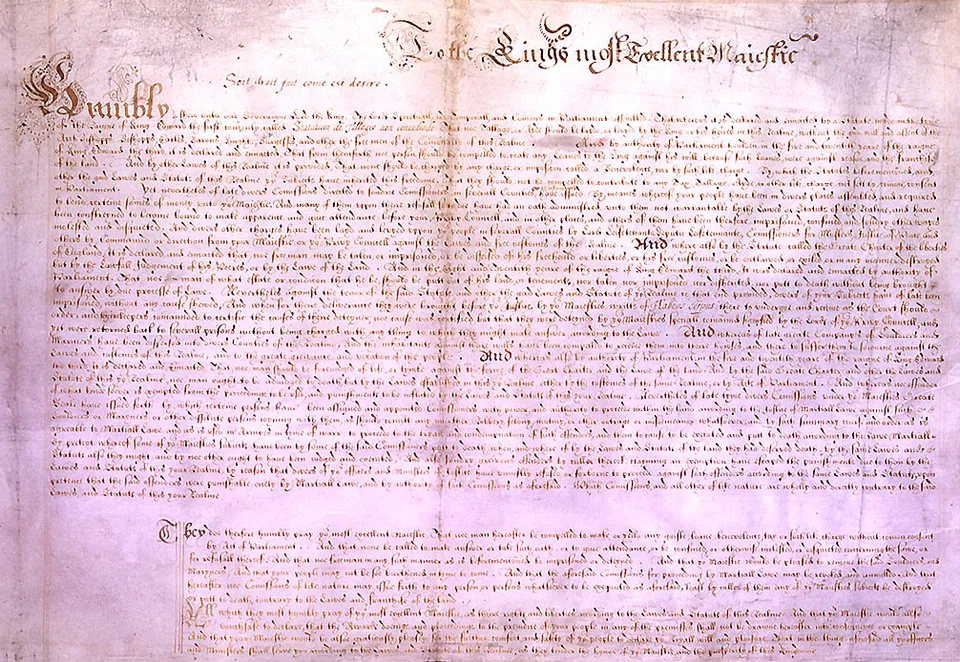
Parliament of England . · Public domain · Source
James I of the Stuart dynasty proclaimed the divine right of kings, and his son Charles I, needing money for wars with Spain and France, levied forced loans, jailed those who refused without trial and billeted soldiers in private houses. Parliament, led by Edward Coke, drew up a petition affirming the rights held since Magna Carta.
The Petition of Right declared that no tax be levied without Parliament’s consent, no one be imprisoned without cause shown, no soldiers be billeted in private homes and no martial law be used in peacetime. Charles I assented on 7 June to obtain a grant of taxes, but the next year he dissolved Parliament and ruled for eleven years without it, collecting levies such as ship money. This conflict led to the Puritan Revolution.