Shimabara Rebellion
Also called: Shimabara–Amakusa uprising
In 1637 the peasants and Christians of Shimabara and Amakusa in Kyushu rose against crushing taxes and persecution and held out in Hara Castle, but were crushed by the shogunate’s army in 1638.
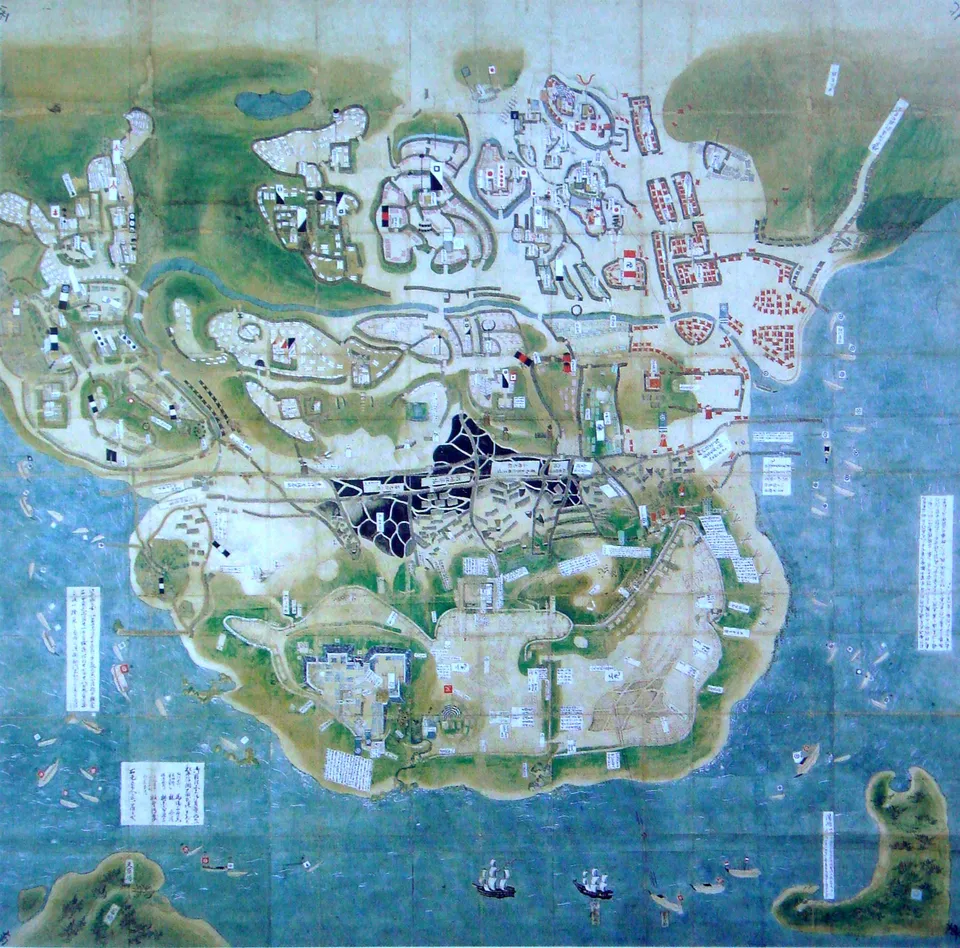
Japanese painting Anonymous 17th century · Public domain · Source
The Edo shogunate banned Christianity on its own lands in 1612 and nationwide in 1614, expelling the missionaries and persecuting believers. In Shimabara and Amakusa in Kyushu, heavy taxes, failed harvests and harsh lords on top of the persecution drove the peasants in 1637 to rise under the youth Amakusa Shirō. Some 30,000 held out in the ruins of Hara Castle, but the shogunate brought over 120,000 troops, and even bombardment from a Dutch ship, took the castle in 1638 and killed nearly everyone inside.
After the revolt the shogunate, more fearful than ever of Christianity, barred Portuguese ships in 1639. Hidden believers were rooted out by requiring everyone to be certified as a member of a Buddhist temple (terauke) and by making people tread on images of Jesus or Mary (fumie).