Dedication of the Statue of Liberty
Also called: Statue of Liberty, Liberty Enlightening the World
The Statue of Liberty, paid for by public subscription in France to mark the centennial of American independence, was raised on an island at the mouth of New York Harbor and dedicated.
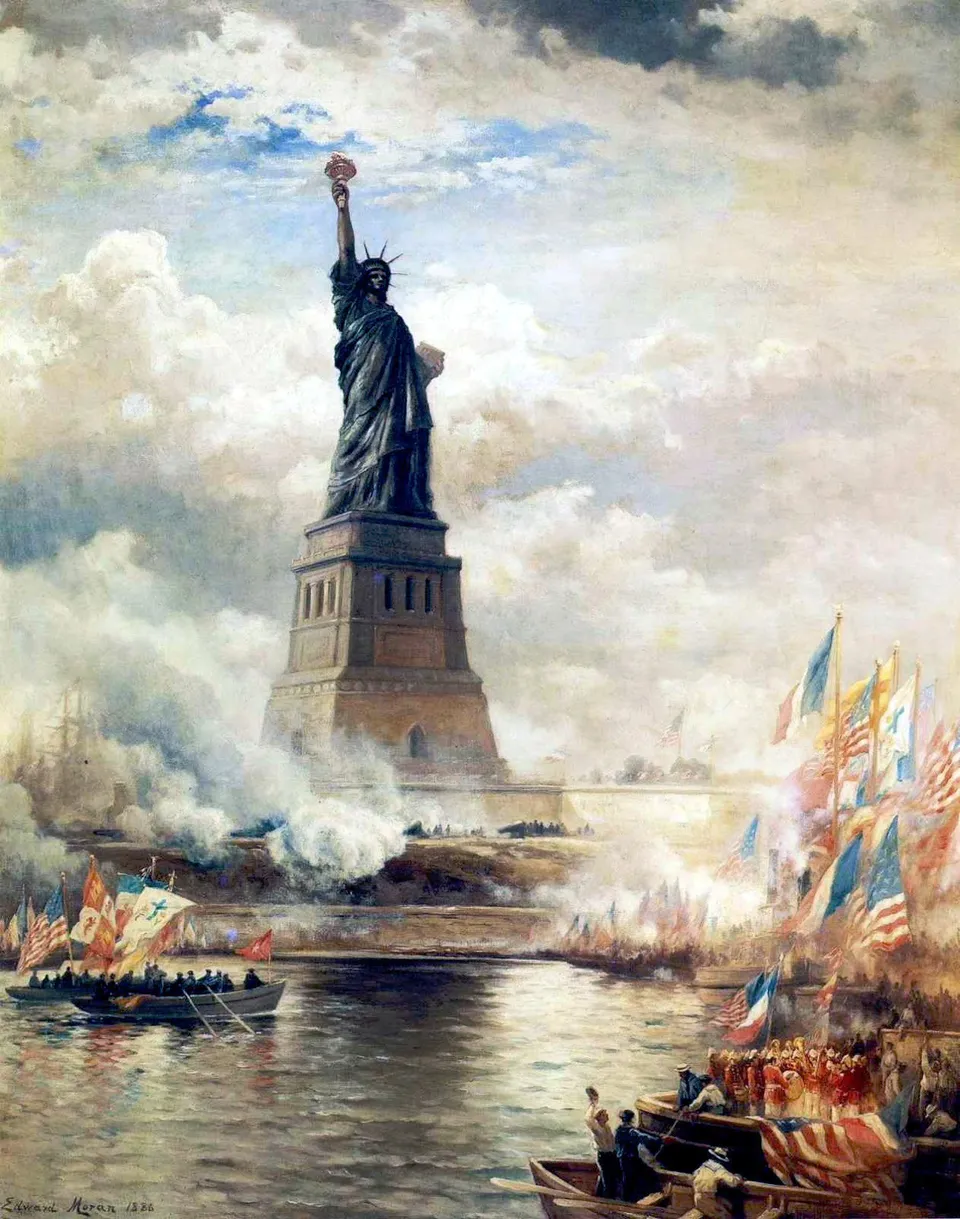
Edward Moran · Public domain · Source
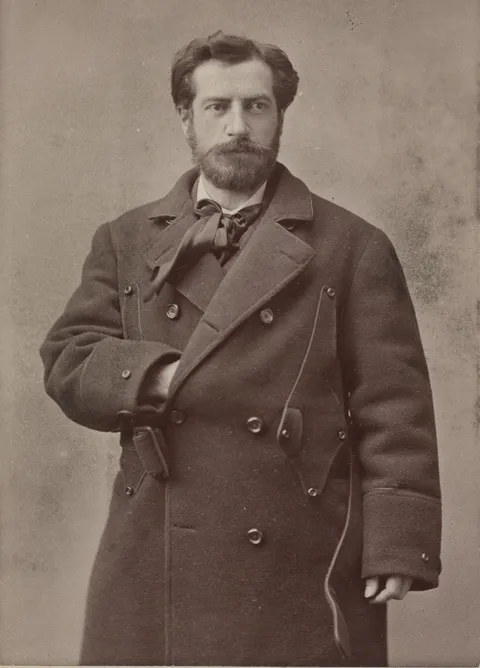
In 1865, it is said, the French jurist Laboulaye proposed a monument to liberty for the United States, which had just ended slavery with the close of the Civil War; for a republican under Napoleon III’s empire it also expressed hope for liberty in France. The sculptor Bartholdi designed a goddess bearing a torch, and from 1875 money was raised from the French public to build her in Paris. Her skin of thin hammered copper is held up from inside by an iron framework designed by Gustave Eiffel. The tablet in her left hand bears the date of the Declaration, 4 July 1776, in Roman numerals, and broken shackles lie at her feet.
Completed in Paris in 1884, the statue was shipped in 350 pieces and reached New York in June 1885. When money for the pedestal ran short, the publisher Joseph Pulitzer raised it through his New York World, with more than 120,000 people giving. On 28 October 1886 the statue was dedicated in the presence of President Cleveland; its formal name is “Liberty Enlightening the World”. After the immigration station opened on neighbouring Ellis Island in 1892, she was the first sight of America for countless immigrants arriving by sea. Weathering turned her copper from bright brown to today’s green, and in 1984 she became a UNESCO World Heritage Site.