Emperor Xiaowen’s Move to Luoyang and Sinicization Policy
Also called: Xiaowen’s reforms
Emperor Xiaowen of Northern Wei introduced the equal-field system and, after moving the capital to Luoyang in 494, replaced Xianbei dress, speech and surnames with Chinese ones and encouraged marriage with Han Chinese families.
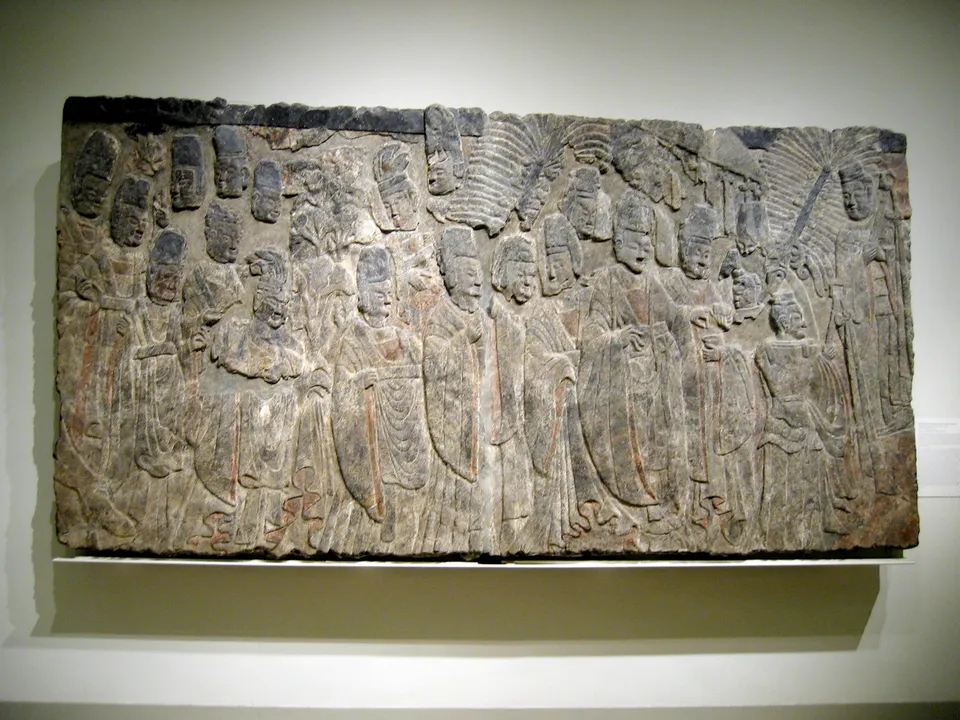
Early in his reign, with the regent Empress Dowager Feng, Xiaowen introduced the equal-field system in 485, under which the state allotted land to households and taxed them; passed on to Sui and Tang, it became the land system of the codified state. Once ruling in his own right, he moved the capital from Pingcheng to Luoyang in 493–494 to secure his hold over the Han Chinese.
He then banned Xianbei dress and speech at court, changed Xianbei surnames to Chinese ones — the imperial Tuoba became Yuan — and urged marriage with great Chinese families. New caves were begun at Longmen south of Luoyang. But frontier soldiers resentful of sinicization rose in the Six Garrisons Rebellion of 523, and Northern Wei split into Eastern and Western Wei in 534. The garrison militia (fubing) begun in Western Wei and a mixed Xianbei–Chinese ruling class passed through Northern Zhou to Sui and Tang.