Politics15–17 January 1935

Zunyi Conference

Also called: Tsunyi Conference

During the Long March in January 1935, an enlarged Politburo meeting at Zunyi in Guizhou criticised the military leadership of Bo Gu and Otto Braun and raised Mao Zedong into the party’s leading core.
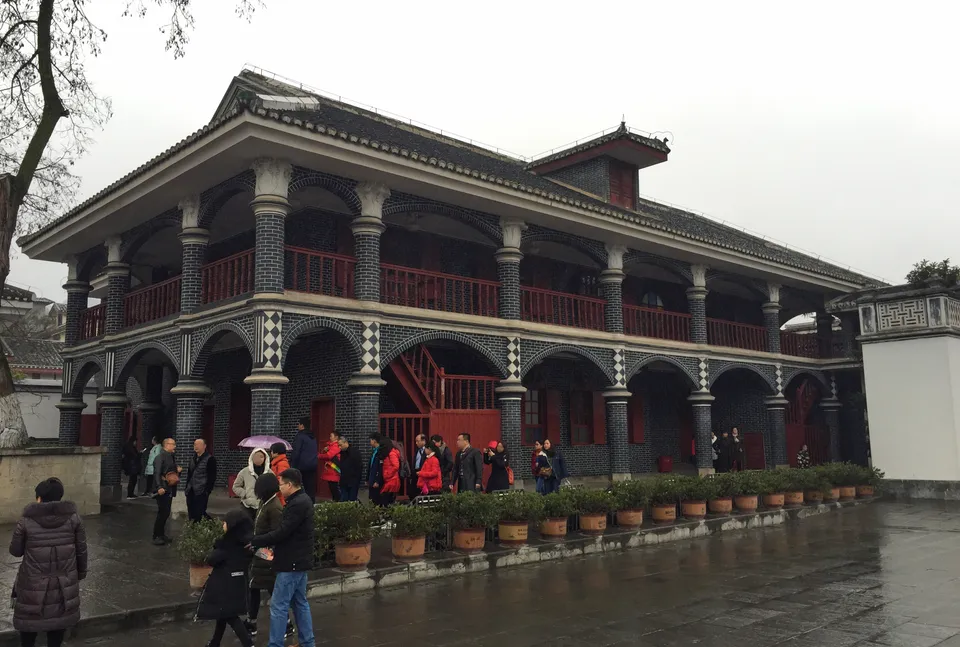
The warlord’s mansion in Zunyi where the enlarged Politburo meeting was held in January 1935, now a memorial

N509FZ · CC BY-SA 4.0 · Source

After the Red Army was badly depleted crossing the Xiang River in December 1934, criticism of the existing strategy grew within the leadership. The army changed course into Guizhou, took Zunyi on 7 January 1935, and from 15 to 17 January an enlarged Politburo meeting was held in a warlord’s mansion there.

The meeting blamed the defeat in the fifth encirclement campaign on the positional defence of Bo Gu and the Comintern adviser Otto Braun (Li De) and elected Mao Zedong to the Politburo Standing Committee. In February Zhang Wentian replaced Bo Gu as the party’s overall leader, and in March a three-man military command of Mao, Zhou Enlai and Wang Jiaxiang was formed. Official party history treats the meeting as the turning point at which Mao’s leading position began to be established.

The map in 1935

OpenFreeMap © OpenMapTiles © OpenStreetMap contributors

States at the time
Republic of China
Places
Zunyi

People

  • Mao Zedong1893 – 1976

    key figure · Chairman of the Chinese Communist Party who won the civil war and founded the People’s Republic in 1949, and launched the Great Leap Forward and the Cultural Revolution

  • Zhou Enlai1898 – 1976

    participant · First premier of the People’s Republic of China (1949–1976), long in charge of diplomacy, who arranged Nixon’s 1972 visit

  • Zhu De1886 – 1976

    participant · Commander-in-chief of the Red Army and the People’s Liberation Army; he joined Mao Zedong at Jinggangshan in 1928 (“Zhu–Mao”) and was made a marshal in 1955

Themes that include this event

  • From the Chinese Civil War to the Cultural Revolution1927 – 1976

    From the collapse of the United Front in 1927, through rural bases, the Long March and Yan’an, to the Communists’ victory in the civil war and the founding of the People’s Republic — then land reform, the Great Leap Forward and famine, the Sino-Soviet split and the Cultural Revolution, up to Mao’s death and the arrest of the Gang of Four in 1976, while the Nationalist government withdrew to Taiwan