The Alecton and the Giant Squid
The French warship Alecton met a giant squid some five or six metres long off the Canary Islands and, trying to harpoon it, brought back only its tail end — one of the first records of the legendary sea monster as a real animal.
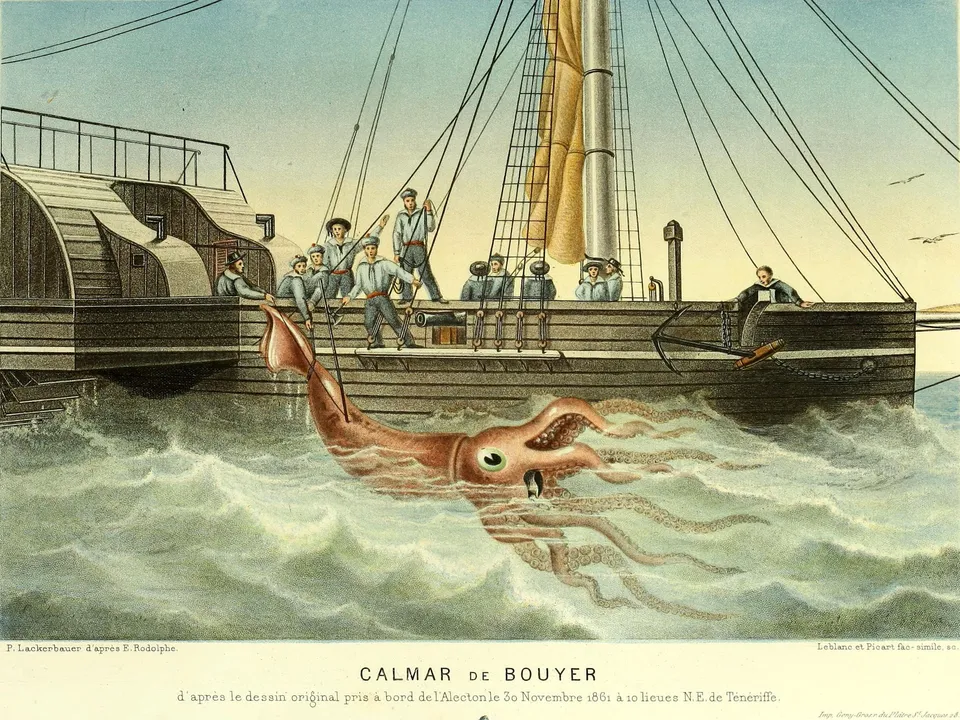
P. Lackerbauer · Public domain · Source
On 30 November 1861 the French navy’s Alecton, bound for the Canary Islands, came upon a huge squid floating at the surface north of Tenerife. Commander Bouyer spent hours trying to take it with guns and harpoons; a rope was got round it, but the body tore and only the tail end was hauled aboard. It soon rotted, but an officer’s drawing and the report reached the French Academy of Sciences.
From about this time it was accepted that giant squid, long thought as legendary as the Norwegian kraken, really existed. In the giant squid scene of Twenty Thousand Leagues Under the Seas, Jules Verne speaks of the Alecton directly.