Religious Reform of Amenhotep IV
Also called: Amarna reform, Atenism
Amenhotep IV replaced the god Amun with the sole worship of the sun disc Aten, renamed himself Akhenaten and moved the capital to Amarna, but the reform was reversed after his death.
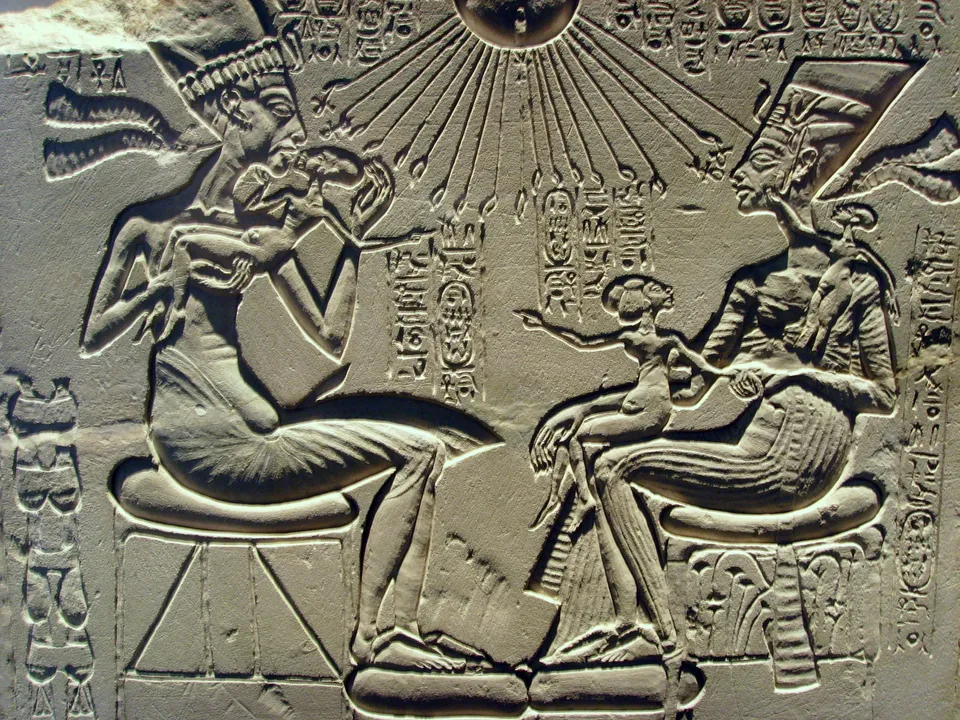
myself ( Gerbil from de.wikipedia) · Public domain · Source
In the New Kingdom capital of Thebes the priests of Amun had amassed great wealth and power. Amenhotep IV, who came to the throne around 1353 BC, ordered the worship of the sun disc Aten alone and changed his name to Akhenaten, “effective for the Aten”. He then left Thebes, built a new capital at Akhetaten (modern Amarna) and curbed the priesthood of Amun.
The period produced the naturalistic Amarna art, which showed the royal family without idealization, and the Amarna letters, cuneiform diplomatic correspondence with neighbouring kings. After his death, however, the cult of Amun was restored under Tutankhamun and the capital returned. The reform is sometimes seen as an early form of monotheism, though its nature is debated.