American Civil War
Also called: Emancipation Proclamation, Battle of Gettysburg, Gettysburg Address
A civil war between the North and South, divided over slavery and the Union. The North under Lincoln won, preserving the Union and abolishing slavery.
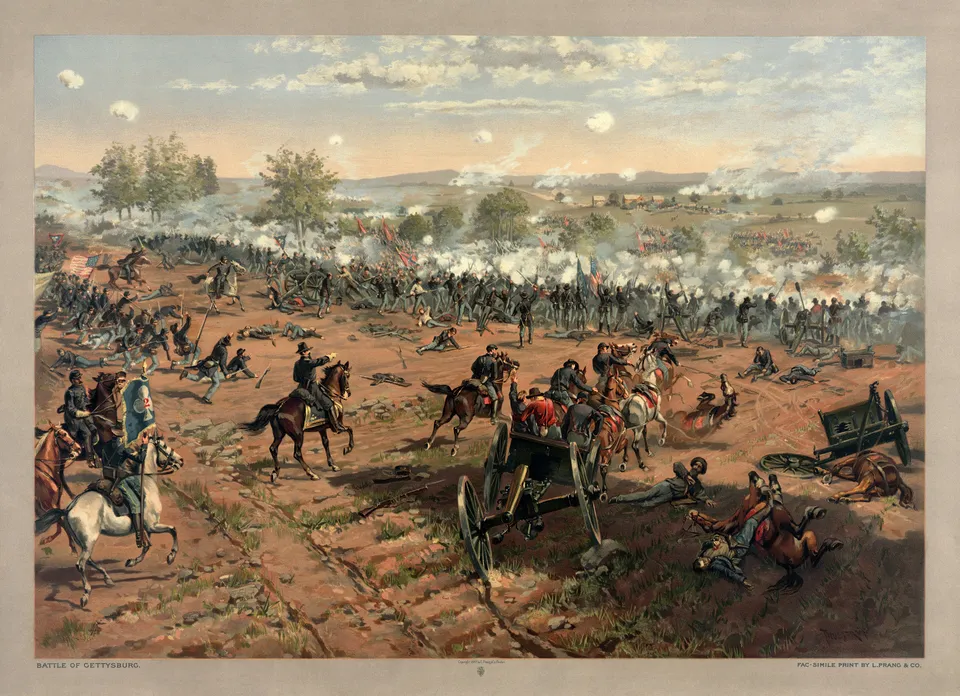
Thure de Thulstrup / Adam Cuerden · Public domain · Source
As the country expanded west, North and South clashed over whether to allow slavery in the new states. The industrial North wanted protective tariffs and free labour; the South, dependent on cotton plantations, wanted free trade and slavery. When Lincoln, who opposed the spread of slavery, was elected president in 1860, Southern states left the Union and formed the Confederacy (eventually eleven states), and the war began on 12 April 1861 when Confederate guns fired on Fort Sumter.
On 1 January 1863 Lincoln issued the Emancipation Proclamation, making the freeing of slaves a war aim and heading off British and French intervention on the South’s side. That July the Union victory at Gettysburg turned the tide, and in November Lincoln spoke there of “government of the people, by the people, for the people”.
The Confederate general Lee surrendered on 9 April 1865; Lincoln was assassinated five days later. The war, which killed more than 600,000 people, preserved the Union, and the Thirteenth Amendment (1865) abolished slavery. Industrial capitalism grew rapidly afterwards, but discrimination against Black Americans in the South long persisted.