US–Japan Treaty of Amity and Commerce
Also called: Harris Treaty, Ansei Treaties
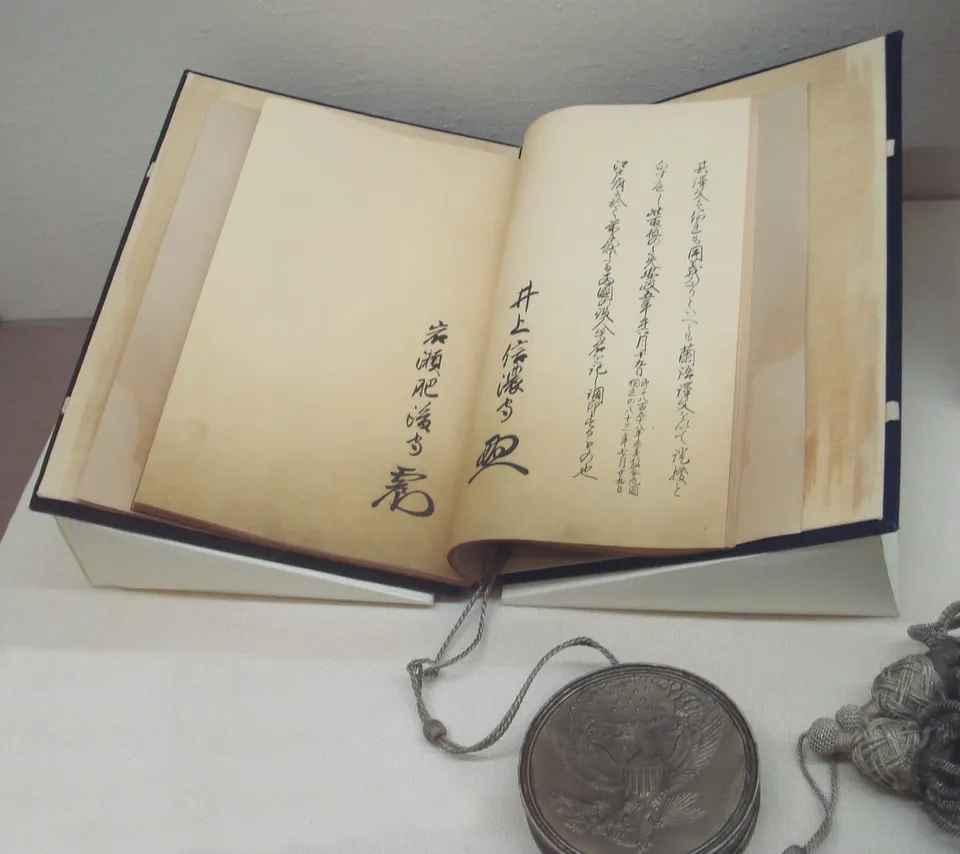
The Tokugawa shogunate signed a commercial treaty with the United States without the emperor’s consent. Granting consular jurisdiction and denying Japan tariff autonomy, the unequal treaty fuelled the "revere the emperor, expel the barbarians" movement and the fall of the shogunate.
World Imaging · CC BY-SA 3.0 · Source
The American consul general Townsend Harris pressed for trade, pointing to China’s plight in the Second Opium War. In 1858 the chief minister Ii Naosuke signed the treaty without imperial sanction. It opened Kanagawa (Yokohama), Nagasaki, Niigata, Hyōgo (Kobe) and Hakodate, recognised consular jurisdiction, and fixed tariffs by mutual agreement, so that Japan lost control of its own tariffs. Similar treaties with the Netherlands, Russia, Britain and France soon followed (the Ansei Treaties).
Exports of raw silk and tea surged, gold flowed out and prices rose. After Ii purged his opponents (the Ansei Purge) and was assassinated in 1860, the movement to "revere the emperor and expel the barbarians" (sonnō jōi) grew fierce. But Satsuma and Chōshū, bombarded by Western fleets in reprisal, saw that expulsion was impossible and turned to overthrowing the shogunate — leading to the return of power to the emperor in 1867 and the Meiji Restoration the next year.