Discovery of the Antarctic Ozone Hole
Scientists of the British Antarctic Survey reported that the ozone over Antarctica was falling sharply every spring — leading to the Montreal Protocol (1987) to cut CFCs.
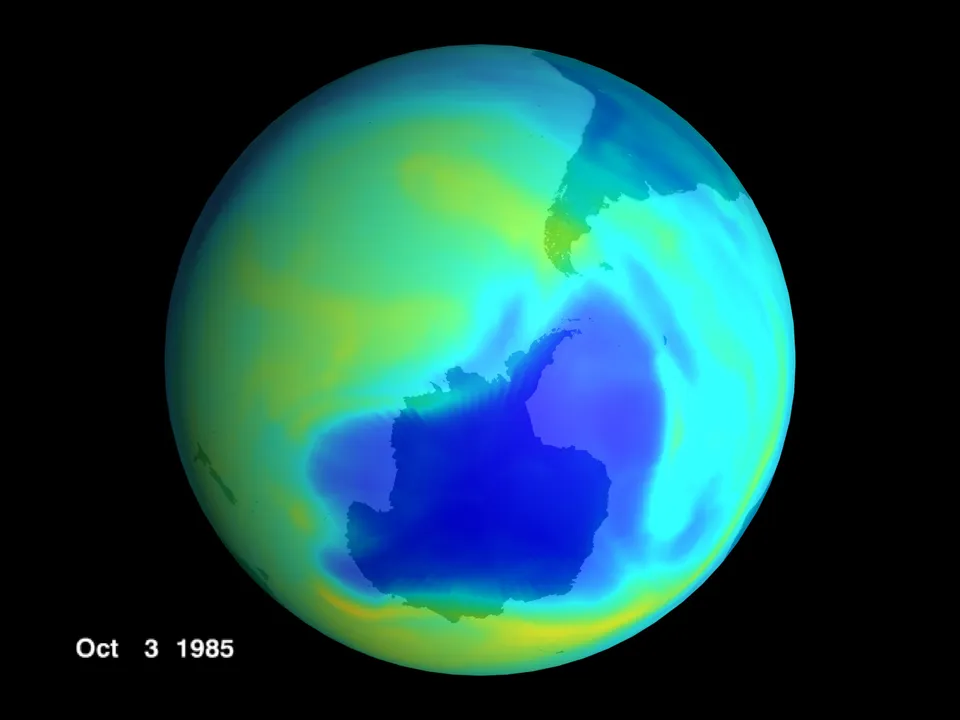
NASA/Goddard Space Flight Center Scientific Visualization Studio · Public domain · Source
Joseph Farman, Brian Gardiner and Jonathan Shanklin of the British Antarctic Survey, examining records kept at Halley station since the 1950s, found that from the late 1970s the ozone overhead fell sharply every Antarctic spring (September–October). Published in Nature in May 1985, the discovery showed the warning that CFCs used in refrigerators and spray cans were destroying the ozone layer to be real.
The world moved fast: in 1987 the Montreal Protocol committed nations to phase out CFCs. The ozone hole still forms every year, but the layer is expected to recover almost fully by the middle of the century — a rare example of nations solving a global environmental problem together.