Armistice of 11 November 1918
Also called: Armistice of Compiègne, Armistice Day
Germany signed an armistice with the Allies in a railway carriage in the forest of Compiègne. At 11 a.m. on 11 November the guns fell silent and the First World War, more than four years long, came to an end.
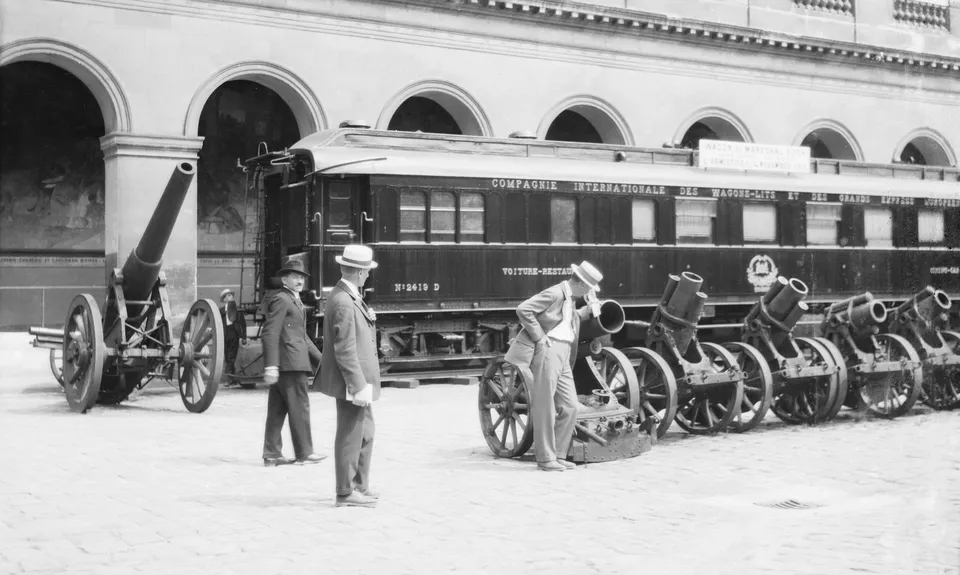
American Colony (Jerusalem). Photo Dept., photographer · Public domain · Source
After its spring offensive of 1918 failed, Germany was driven back by the Allied counter-offensive that began at Amiens in August. Bulgaria at the end of September, the Ottoman Empire at the end of October and Austria-Hungary in early November all made armistices, and revolution broke out in Germany itself.
Early on 11 November a German delegation signed the armistice in the railway carriage of the Allied supreme commander Foch. Germany was to withdraw from occupied territory and Alsace-Lorraine, hand the left bank of the Rhine to the Allies, and surrender its fleet and much of its weaponry. The armistice took effect at 11 o’clock that morning.
Britain, France and other countries still mark the day. But because Germany sought an armistice before its own soil became a battlefield, the belief spread that its army had not really been beaten. In 1940 Hitler took the French surrender in the same railway carriage.