Baptism of Jesus
Also called: Jesus’ baptism in the Jordan
Around AD 28 Jesus was baptised by John the Baptist in the Jordan and began his public ministry. All the Gospels tell of it, and John also appears in the Jewish historian Josephus, so scholars count it as historical.
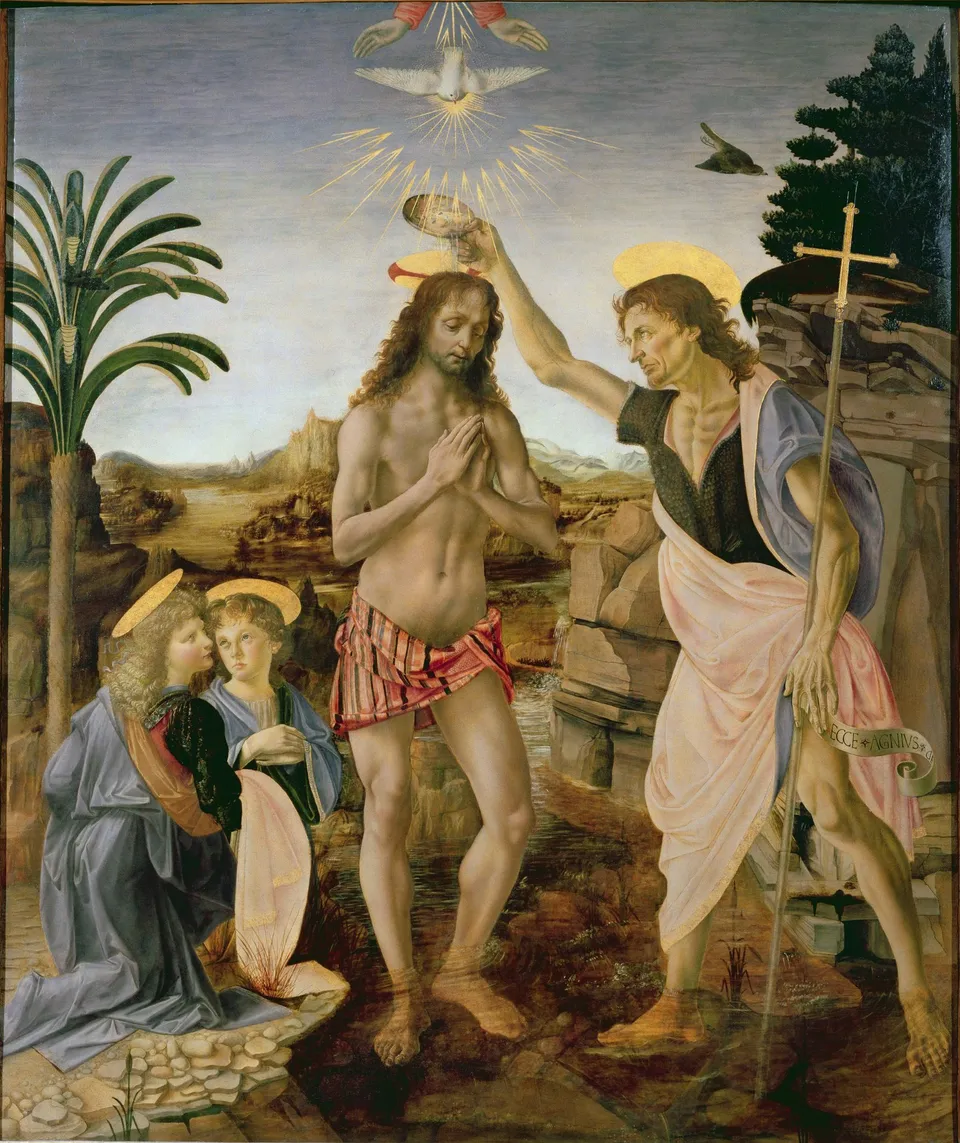
Andrea del Verrocchio / Leonardo da Vinci · Public domain · Source
In the early 1st century John the Baptist preached repentance in the Judaean wilderness, warning that God’s judgement was near, and baptised people by immersing them in the Jordan. Crowds came to him, among them Jesus of Nazareth. Luke dates the start of John’s mission to the fifteenth year of the emperor Tiberius (c. 28–29). After his baptism Jesus returned to Galilee and began to proclaim the kingdom of God. The Gospels say that the heavens opened, the Spirit came down like a dove, and a voice said, “You are my beloved Son.”
John is attested outside the Gospels. The Jewish historian Josephus, in his Antiquities of the Jews, calls him a good man who urged people to virtue and baptism, and says that the tetrarch Herod Antipas, fearing his influence, had him executed at the fortress of Machaerus east of the Dead Sea. John’s followers survived as a group for some time after Jesus’ death.
That John baptised Jesus is counted by scholars among the most certain facts of Jesus’ life. A baptism for the forgiveness of sins at another man’s hands was an awkward story for the early church, with no reason to invent it, and the later Gospels indeed try to explain it away, adding a scene in which John protests. The baptism is placed on the lower Jordan, where Al-Maghtas on the east bank (Jordan) and Qasr al-Yahud on the west bank are venerated as the site.