Conflict26 August 1071

Battle of Manzikert

Also called: Battle of Malazgirt

The Seljuk sultan Alp Arslan routed the Byzantine army at Manzikert in eastern Anatolia and took Emperor Romanos IV prisoner.
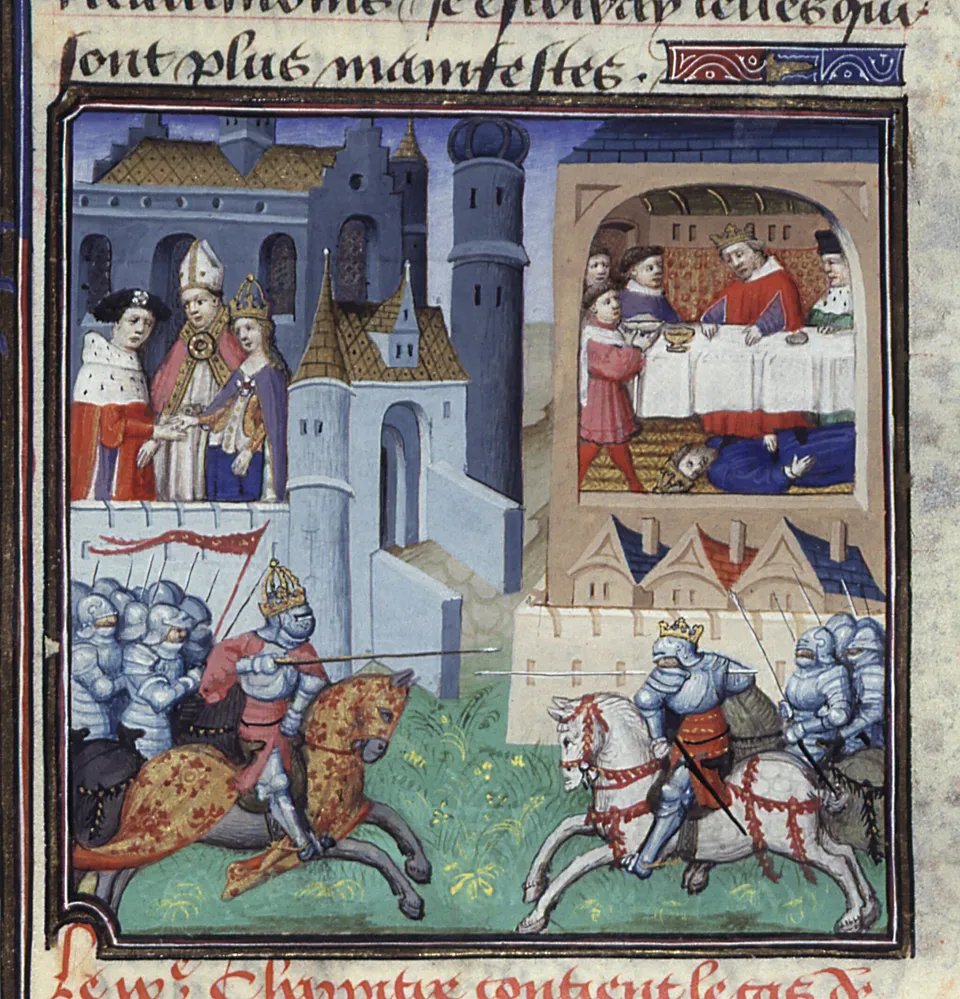
The Battle of Manzikert and the captive Romanos IV, from a 15th-century French manuscript (Bibliothèque nationale de France)

Unknown author · Public domain · Source

After entering Baghdad in 1055, the Seljuk Turks pressed west into Armenia on the eastern frontier of the Byzantine Empire. Emperor Romanos IV Diogenes marched east with a large army, but one made up largely of mercenaries and poorly united. In August 1071 at Manzikert, north of Lake Van, Alp Arslan’s Seljuk army inflicted a heavy defeat and captured the emperor. Released on promise of a ransom and a treaty, Romanos lost his throne to a coup in the capital.

While Byzantium was torn by civil strife, Turkish nomads poured onto the Anatolian plateau, and a branch of the Seljuks founded the Sultanate of Rum, first at Nicaea and later centred on Konya. From this time Anatolia gradually became a Turkish land, laying the ground for the later rise of the Ottomans. Hard pressed, the Byzantine emperor Alexios I appealed to western Europe for help, and the Crusades began.

The map in 1071

OpenFreeMap © OpenMapTiles © OpenStreetMap contributors

States at the time
Seljuk Empire · victor
Byzantine Empire · defeated
Places
Manzikert

People

  • Alp Arslan1029 – 1072

    commander · Seljuk sultan (r. 1063–1072), nephew of Tughril Beg, who captured the Byzantine emperor at Manzikert in 1071

  • Romanos IV Diogenes1072

    commander · Byzantine emperor (r. 1068–1071) who was captured by the Seljuks at Manzikert and, after his release, was overthrown in a coup

Before and after

Earlier
1054 East–West Schism
Later
1144 Fall of Edessa

Themes that include this event

  • Turkic-Islamic Empires and Other Civilizations1000 – 1533

    From the Ghaznavid raids on India to the Mughal Empire and Suleiman I — five centuries in which Turkic-led Islamic empires took western Asia and India, while Africa, Southeast Asia and the Americas raised civilisations of their own