Battle of Waterloo
Also called: Hundred Days
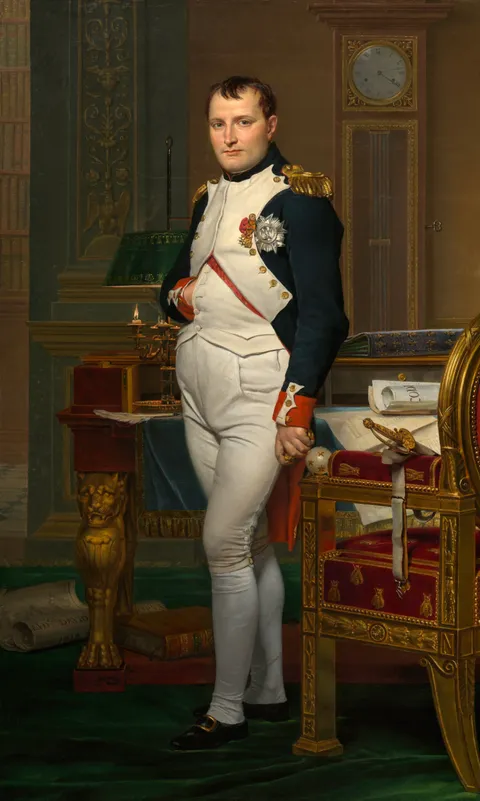
Napoleon, who had escaped Elba and become emperor again, was defeated at Waterloo in Belgium by Wellington’s Anglo-allied army and Blücher’s Prussians. The Hundred Days and the Napoleonic era came to an end.
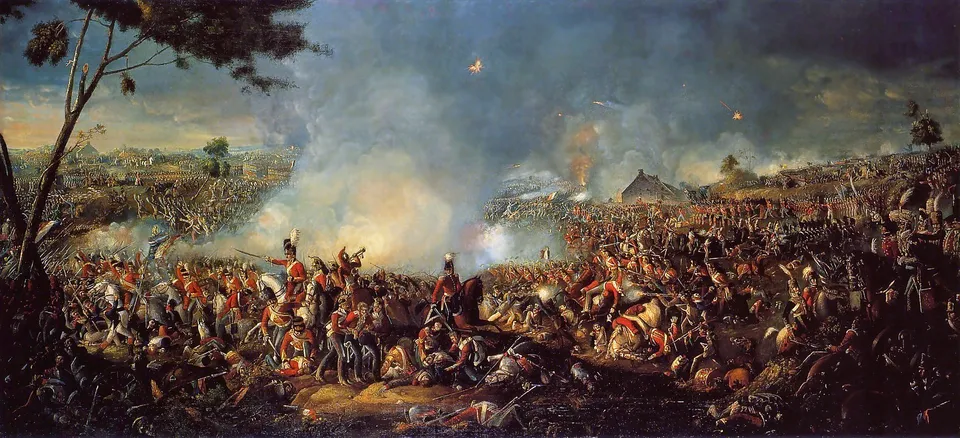
William Sadler · Public domain · Source
Escaping from Elba in February 1815, Napoleon entered Paris in March and became emperor once more. The powers gathered at the Congress of Vienna quickly formed a new coalition. Napoleon hoped to beat the British and Prussian armies in Belgium separately before the allies could combine.
On 18 June near Waterloo, south of Brussels, Wellington’s British, Dutch and German army held off French attacks all day, and when Blücher’s Prussians arrived in the evening the French army broke. Napoleon abdicated again and was exiled to St Helena in the South Atlantic, where he died in 1821. More than twenty years of revolutionary and Napoleonic wars were over, and the order set by the Congress of Vienna (the Vienna system) could take hold.