British Reform Act and Chartism
Also called: Great Reform Act, People’s Charter, Chartist movement
The Reform Act of 1832 gave the vote to the middle classes, including industrial capitalists. Workers left out of the franchise launched the Chartist movement around the People’s Charter.
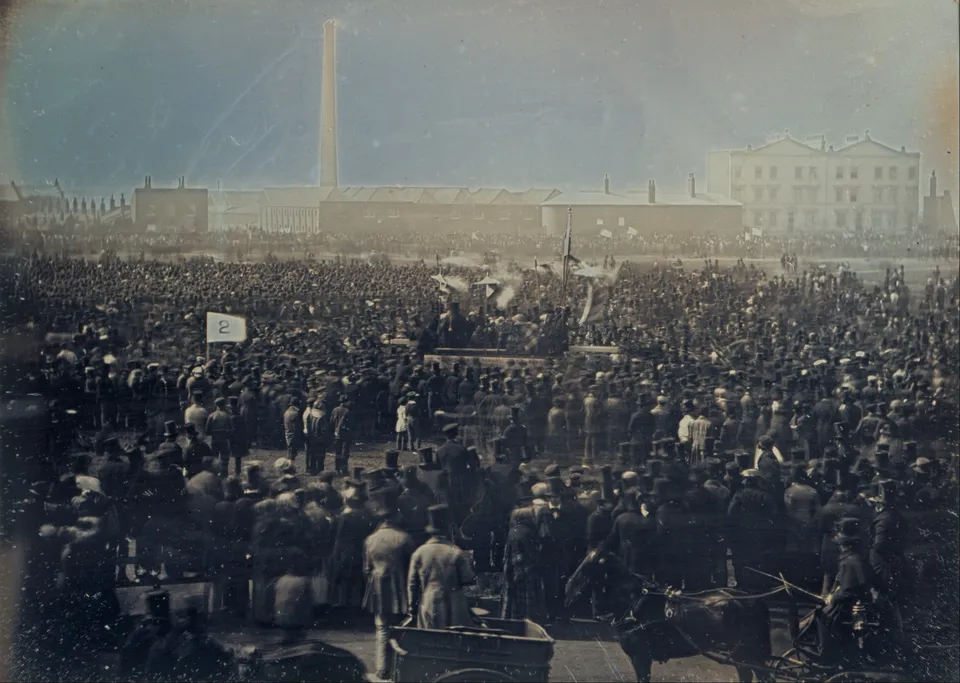
William Edward Kilburn (1818 - 1891) Details on Google Art Project · Public domain · Source
Britain’s parliamentary constituencies dated from before the Industrial Revolution: almost empty “rotten boroughs” returned members while new industrial towns such as Manchester had none. Under the influence of the July Revolution, the First Reform Act of 1832 abolished the rotten boroughs, gave seats to the towns and extended the vote to the propertied middle classes, including industrialists. Britain pursued further liberal reforms: Catholic emancipation (1829), abolition of slavery (1833), the Factory Act (1833) and repeal of the Corn Laws (1846).
Workers still without the vote drew up the People’s Charter in 1838 with six points: universal male suffrage, the secret ballot, no property qualification and payment for MPs, equal constituencies and annual elections. Petitions signed by millions in 1839, 1842 and 1848 were all rejected, and the movement faded after 1848, but most of its demands were later met by the Reform Acts of 1867 and 1884 and the Ballot Act of 1872.