Cheonmachong (Heavenly Horse Tomb), Gyeongju
A Silla stone-mound wooden-chamber tomb excavated in 1973. It yielded a gold crown and the Heavenly Horse painting on a birch-bark saddle flap.
Christophe95 · CC BY-SA 4.0 · Source
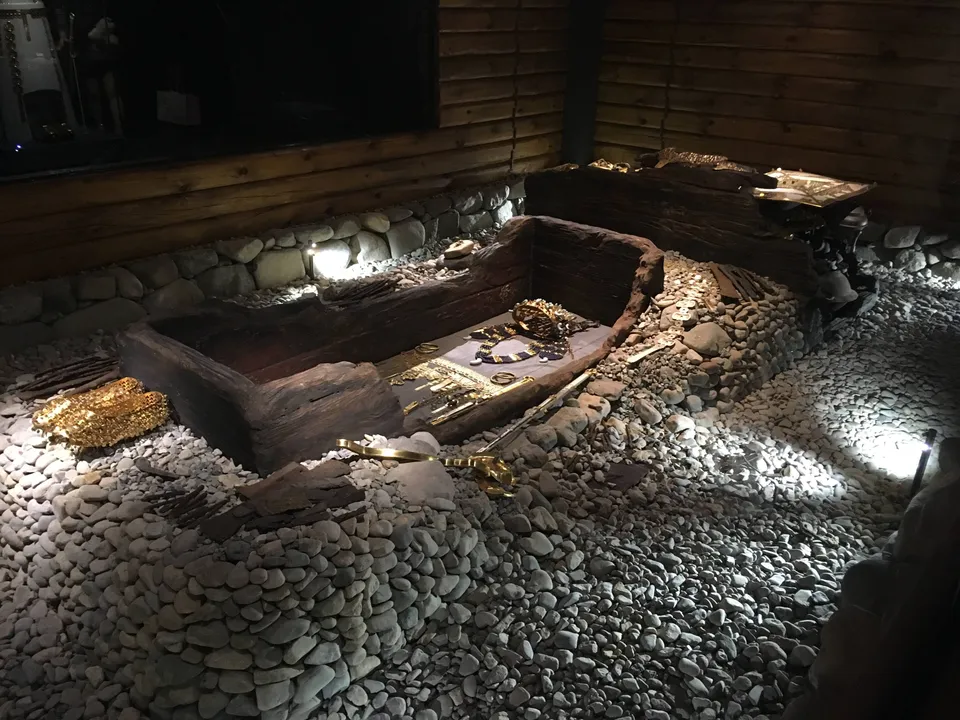
Tomb No. 155 in Daereungwon, Gyeongju. When it was excavated in 1973, a flying horse painted on a saddle flap (hung below the saddle to keep mud off the rider) gave it the name "Heavenly Horse Tomb". Painted on birch bark, it is almost the only painting surviving from Silla and a National Treasure, as is the gold crown.
A Silla stone-mound wooden-chamber tomb was made by setting a wooden chamber, piling stones over it and covering it with earth. With no entrance it was hard to rob and kept many grave goods, but having no stone room it has no murals. The stone-chamber tombs of Goguryeo and Baekje, by contrast, have murals but were easily robbed. Silla too turned to stone-chamber tombs from the 6th century.
Cheonmachong is open inside, so the structure of the tomb can be seen directly.