Chicago Pile-1 — The First Chain Reaction
Also called: CP-1
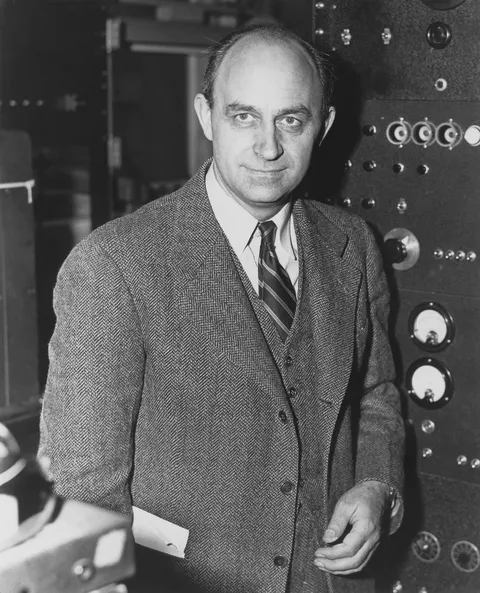
On 2 December 1942, in the world’s first reactor — graphite and uranium stacked by Enrico Fermi beneath the stands of the University of Chicago’s football field — a man-made nuclear chain reaction sustained itself for the first time.
In a squash court under the west stands of Stagg Field at the University of Chicago, Fermi and his colleagues stacked some 40,000 graphite bricks and uranium in layers to build a "pile". On the afternoon of 2 December, as the cadmium control rods were slowly withdrawn, the clicking of the neutron counters rose to an unbroken roar and the chain reaction sustained itself for four and a half minutes.
Announcing the success, the physicist Arthur Compton telephoned Washington in code: "The Italian navigator has landed in the new world." Proof that a chain reaction was possible opened the way to the great plutonium reactors at Hanford — and the reactor later became the starting point of nuclear power.