World · History1938 – 194911 events

The Birth of the Atomic Bomb

From the discovery of fission to the first Soviet bomb — Einstein’s letter, the Manhattan Project, the Trinity test, Hiroshima and Nagasaki, and the dawn of the nuclear age
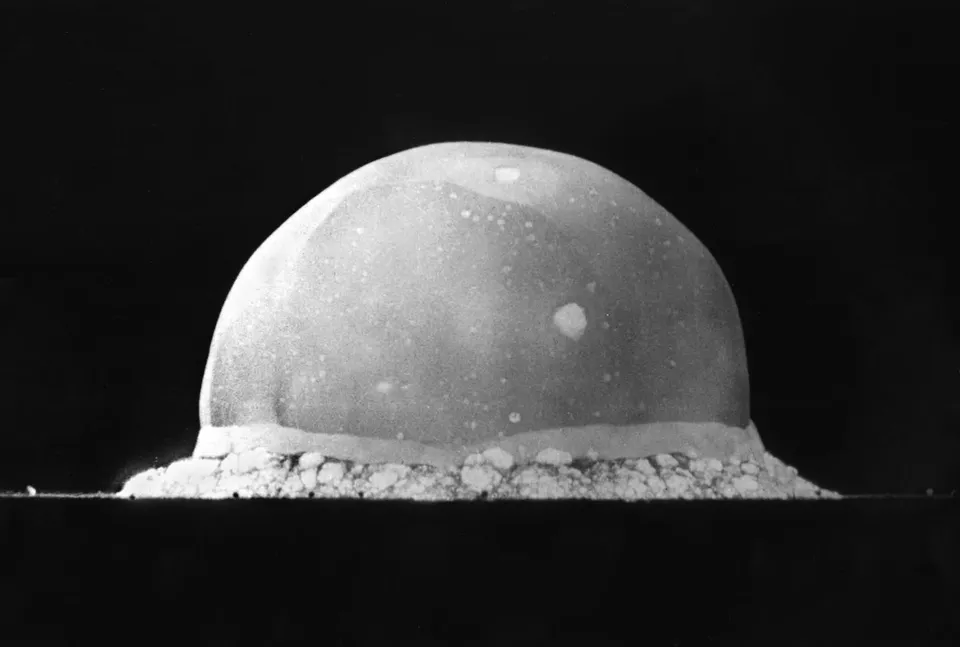
트리니티 실험 — 세계 첫 원자 폭탄이 터지고 0.016초 뒤의 불덩이, 1945년 7월 16일 뉴멕시코

Berlyn Brixner / Los Alamos National Laboratory · Public domain · Source
The theme on the map

OpenFreeMap © OpenMapTiles © OpenStreetMap contributors

11 events in this theme

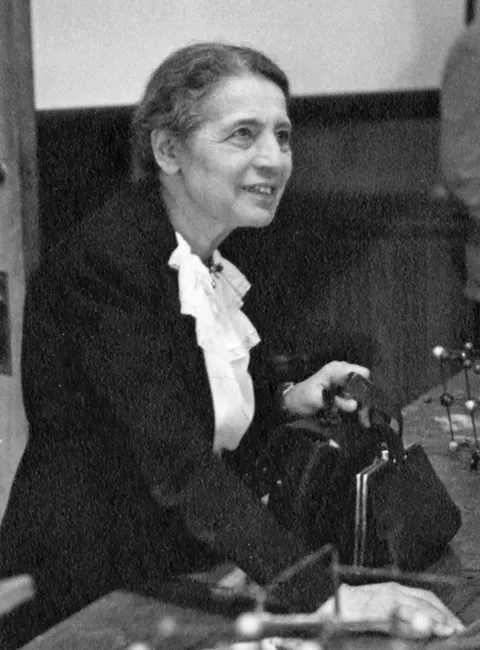
  1. In December 1938 the Berlin chemists Otto Hahn and Fritz Strassmann found barium produced from uranium bombarded with neutrons. The exiled Lise Meitner and Otto Frisch explained that the uranium nucleus had split in two, releasing enormous energy.

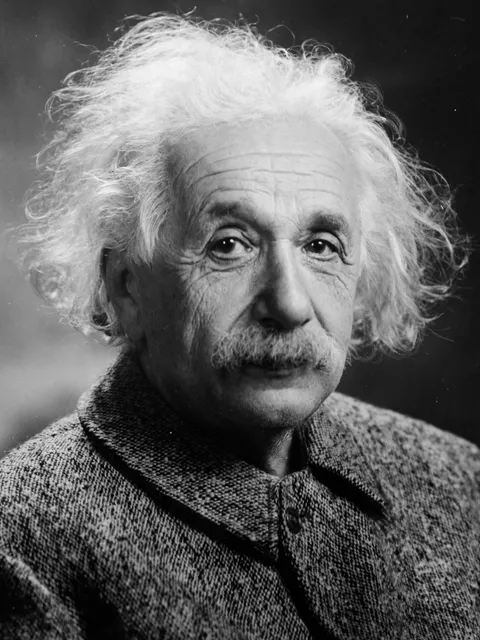
  2. In August 1939 Einstein signed a letter drafted by Szilard warning President Roosevelt that Nazi Germany might build an atomic bomb first and that the United States should speed up its own research.

  3. Japanese naval aircraft made a surprise attack on the US Pacific Fleet at Pearl Harbor, Hawaii. America entered the war, which spread across the Pacific (the Pacific War).

  4. The secret programme in which the United States, with Britain and Canada, built the atomic bomb. Under General Groves from 1942 it raised secret cities at Oak Ridge, Hanford and Los Alamos, employing over 130,000 people at a cost of some $2 billion.

  5. On 2 December 1942, in the world’s first reactor — graphite and uranium stacked by Enrico Fermi beneath the stands of the University of Chicago’s football field — a man-made nuclear chain reaction sustained itself for the first time.

  6. In 1943 a secret laboratory to design the atomic bomb was founded on a remote mesa at Los Alamos, New Mexico. Oppenheimer, its director, gathered leading scientists including Fermi and Bohr.

  7. Before dawn on 16 July 1945 the world’s first atomic bomb was tested successfully in the New Mexico desert. The mushroom cloud rose 12 kilometres, and Oppenheimer recalled a line from Hindu scripture: "Now I am become Death, the destroyer of worlds."

  8. Truman, Stalin and Churchill (later Attlee) settled the treatment of defeated Germany at Potsdam. During the conference the US, Britain and China issued the Potsdam Declaration demanding Japan’s unconditional surrender.

  9. The United States dropped atomic bombs on Hiroshima and Nagasaki. More than 200,000 people died in the two cities that year, and Japan surrendered soon after.

  10. Japan accepted the Potsdam Declaration and Emperor Hirohito announced the surrender by radio on 15 August. The instrument of surrender was signed aboard USS Missouri in Tokyo Bay on 2 September, ending the Second World War.

  11. On 29 August 1949 the Soviet Union tested its first atomic bomb at Semipalatinsk in Kazakhstan. America’s nuclear monopoly ended after four years, and the nuclear arms race between the two powers began.

Key people

  • J. Robert Oppenheimer1904 – 1967

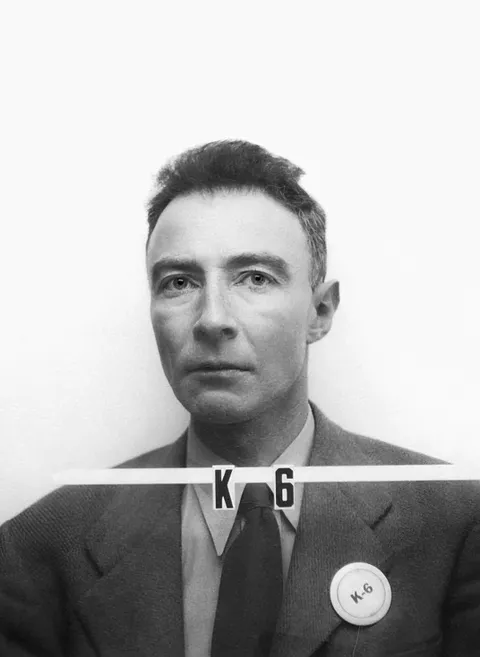
    American physicist who directed the Los Alamos laboratory and led the building of the atomic bomb — the "father of the atomic bomb" — and after the war opposed the hydrogen bomb

  • Franklin D. Roosevelt1882 – 1945

    32nd US president (1933–1945) who led the New Deal and took the US to war after Pearl Harbor; he attended the Cairo and Yalta conferences

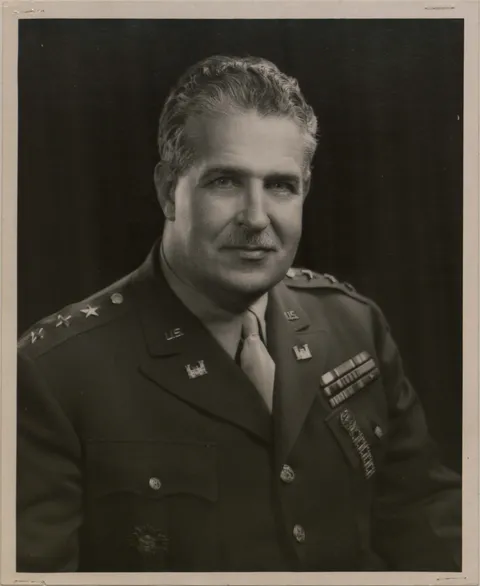
  • Leslie Groves1896 – 1970

    US Army general who oversaw the building of the Pentagon and from 1942 commanded the whole Manhattan Project

  • Harry S. Truman1884 – 1972

    33rd US president (1945–1953) who ordered the atomic bombings, set the policy of containment with the Truman Doctrine and sent US forces to the Korean War

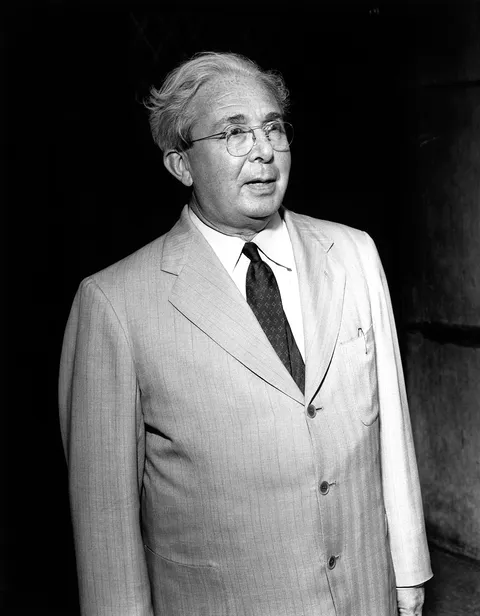
  • Leo Szilard1898 – 1964

    Hungarian-born physicist who first conceived the nuclear chain reaction and persuaded Einstein to write to Roosevelt warning of the atomic bomb

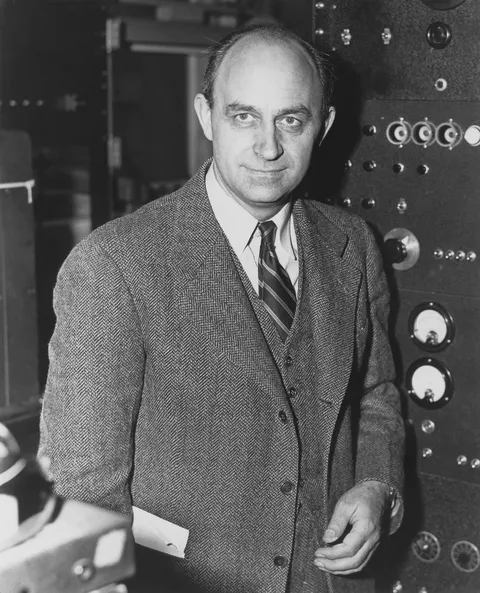
  • Enrico Fermi1901 – 1954

    Italian-born physicist who, after receiving the 1938 Nobel Prize in Physics, emigrated to the US and achieved the first chain reaction with the world’s first reactor in Chicago in 1942

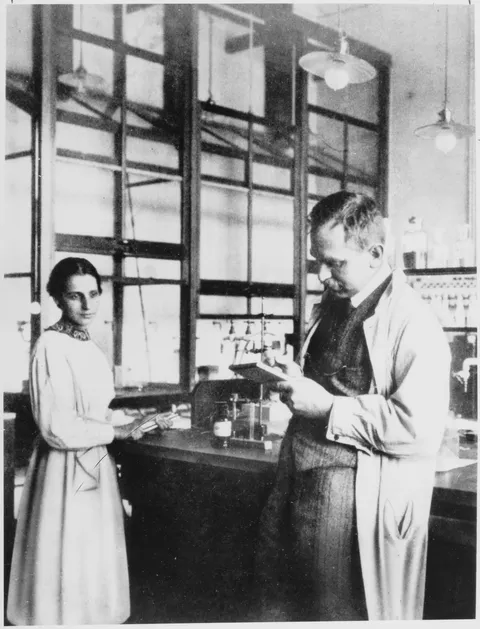
  • Otto Hahn1879 – 1968

    German chemist who discovered uranium fission with Strassmann in 1938 and received the 1944 Nobel Prize in Chemistry

  • Lise Meitner1878 – 1968

    Austrian-born physicist who, after fleeing the Nazis to Sweden, gave the first physical explanation of nuclear fission with her nephew Frisch

  • Albert Einstein1879 – 1955

    German-born physicist who developed the theory of relativity, emigrated to the US in 1933 fleeing the Nazis, and in 1939 signed the letter urging Roosevelt to develop the atomic bomb

  • Yamamoto Isoroku1884 – 1943

    Commander of Japan’s Combined Fleet who planned the attack on Pearl Harbor and the Midway operation; shot down over the South Pacific in 1943

  • Joseph Stalin1878 – 1953

    General Secretary of the Soviet Communist Party who ruled the USSR from the late 1920s until his death, led the war against Germany and drew Eastern Europe into the Soviet bloc

  • Winston Churchill1874 – 1965

    British prime minister (1940–1945, 1951–1955) who led Britain’s resistance through the Battle of Britain and named the “Iron Curtain” in 1946