Colchis, Land of the “Golden Fleece”
Also called: Vani, Phasis, Colchian gold
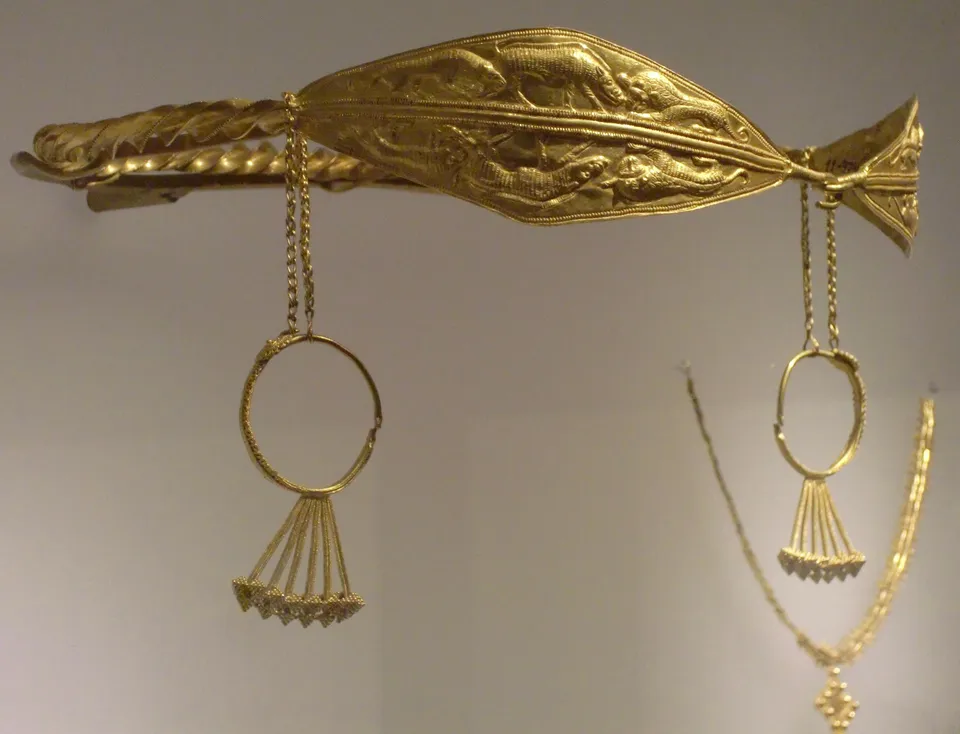
Colchis, at the eastern end of the Black Sea in what is now western Georgia, was known for fine metalwork from the Bronze Age, and from around the 6th century BC Greeks founded colonies such as Phasis on its coast. Gold jewellery from the graves of Vani shows why the Greeks called it rich in gold.
Jonathan Cardy · CC BY-SA 3.0 · Source
In the lowlands of the Rioni (ancient Phasis) basin the Colchian culture, skilled in metalwork, arose from the Late Bronze Age, and the land is counted among the earliest states in Georgian history. From around the 6th century BC Greeks from Miletus and elsewhere founded colonies at Phasis, near modern Poti, and Dioscurias, near modern Sukhumi, to buy gold, iron, timber and honey. It was only around the 5th century BC, once the Greeks knew the land well, that Aia, the goal of the Argonauts, was firmly identified with Colchis.
At Vani (ancient Surium) in inland Colchis, rich graves of the 5th–4th centuries BC excavated in the 20th century have yielded finely worked gold diadems, necklaces and bracelets. The ancient geographer Strabo wrote that the peoples of the Caucasus caught gold dust carried down by mountain torrents in pierced troughs and fleeces, and that this gave rise to the story of the Golden Fleece. Whether he was right cannot be known, but Colchis was certainly famed for its gold.