The Soldier Emperors and Diocletian’s Dominate
Also called: Crisis of the Third Century, Tetrarchy
In the 3rd century Rome suffered turmoil as armies made and unmade emperors. Diocletian divided rule of the empire four ways and founded the dominate, in which the emperor was revered like a god.
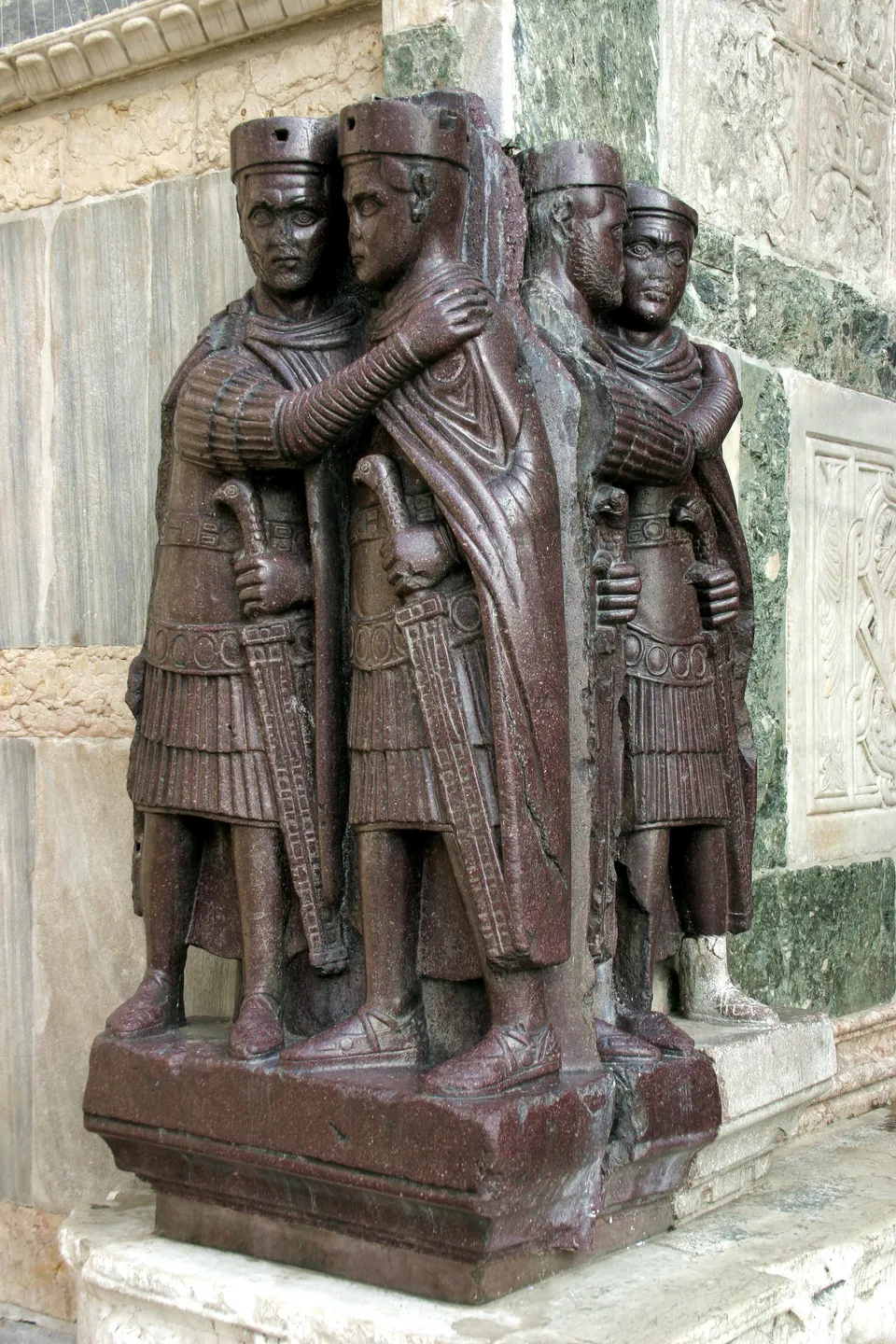
Nino Barbieri ( talk · contribs ) · Public domain · Source
For about fifty years from 235, armies across the empire proclaimed their own emperors, and more than twenty came and went (the age of the soldier emperors). Sasanian Persia in the east and Germanic peoples in the north crossed the frontiers, the currency lost its value and cities declined.
Diocletian, who came to the throne in 284, split the empire into east and west under two senior and two junior emperors (the Tetrarchy) and introduced the dominate, in which the emperor was worshipped like a god. He enlarged the army and bureaucracy, reformed taxation and in 303 launched a great persecution of Christians.