Christianity Legalised: the Edict of Milan and the Council of Nicaea
Also called: Edict of Milan, First Council of Nicaea
In 313 Emperor Constantine legalised Christianity with the Edict of Milan, and in 325 he convened the Council of Nicaea, which made the position of Athanasius orthodox.
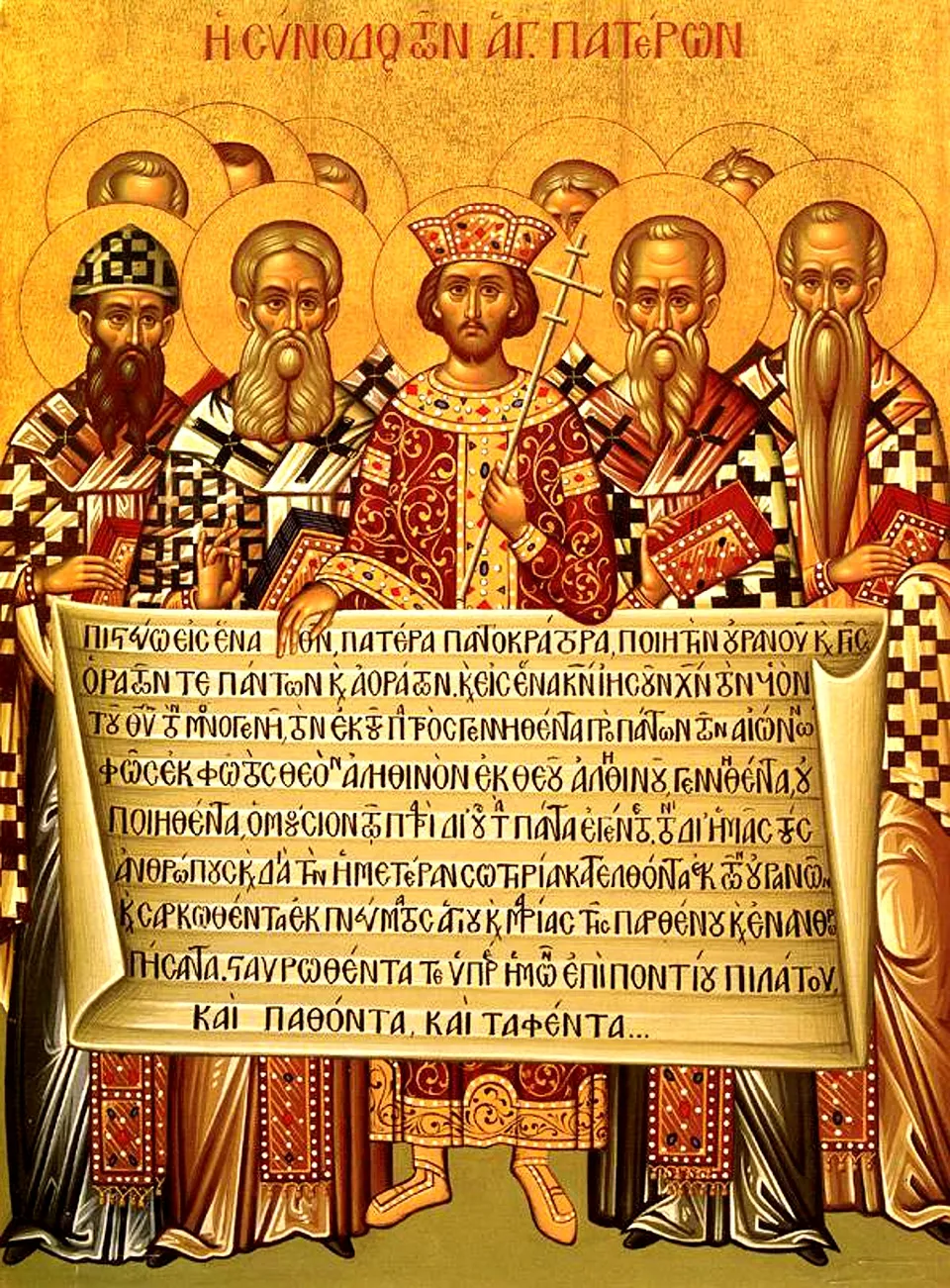
Unknown author · Public domain · Source
After Diocletian stepped down, rivals fought over the throne. Constantine won the west at the Battle of the Milvian Bridge outside Rome in 312, having, it is said, seen a sign of Christ before the battle. In 313 he and Licinius, emperor in the east, issued the Edict of Milan, granting freedom of worship to all religions including Christianity and returning confiscated church property.
Within the church a dispute arose over the nature of Christ. In 325 Constantine called the first council of the whole church at Nicaea, which upheld the Athanasian view that the Father and the Son are of the same substance and condemned as heresy the Arians, who saw Christ as a created being lesser than God. This laid the basis of the doctrine of the Trinity and began a tradition of emperors intervening deeply in church affairs.
In 330 Constantine moved the capital to Byzantium, renamed Constantinople. Emperor Theodosius proclaimed Christianity the state religion in 380 and banned other cults’ sacrifices in 392. In the same year, 313, King Micheon of Goguryeo drove out the Lelang Commandery; Goguryeo adopted Buddhism in 372.