The Edict of Cyrus and the Return of the Jews
Also called: Return to Zion, Second Temple, Cyrus Cylinder
Having conquered Babylon in 539 BCE, Cyrus II of Persia allowed the exiled Jews to return to Jerusalem and rebuild their temple. The Babylonian captivity ended and the Second Temple period began.
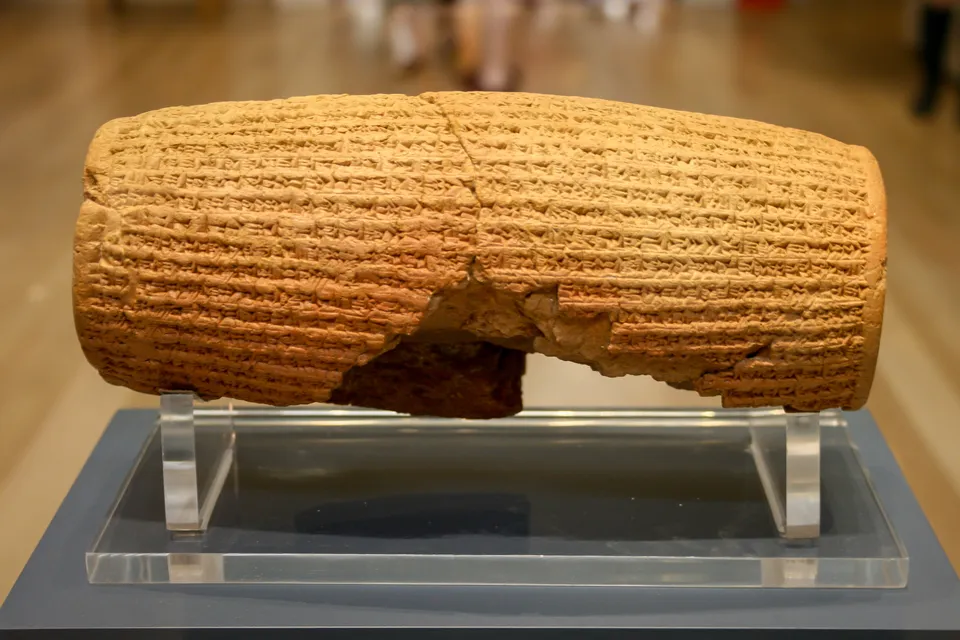
Mike Peel · CC BY-SA 4.0 · Source
In 539 BCE Cyrus II of Persia took Babylon without a fight, and the Neo-Babylonian empire fell. Rather than crush conquered peoples, Cyrus recognised their temples and customs. The Cyrus Cylinder, found at Babylon, records that he sent deported peoples back to their homelands and returned the images of their gods (it does not mention the Jews by name).
The Book of Ezra says that in his first year (538 BCE) Cyrus issued an edict allowing the Jews to go back to Jerusalem and rebuild the temple. Some of those who had lived in Babylon for nearly fifty years returned, and the temple was rebuilt around 516 BCE under Darius I (the Second Temple). The Book of Isaiah even calls Cyrus God’s anointed (messiah).
The returnees rebuilt their community around the temple and the law in Yehud (Judah), a Persian province, and much of the Hebrew Bible is thought to have taken its present form in this period.