Exploration20 – 21 May 1932

Earhart’s Solo Atlantic Flight

Earhart flew her red Lockheed Vega alone from Newfoundland to Northern Ireland in 15 hours — the first woman, and the second person after Lindbergh, to fly the Atlantic solo.
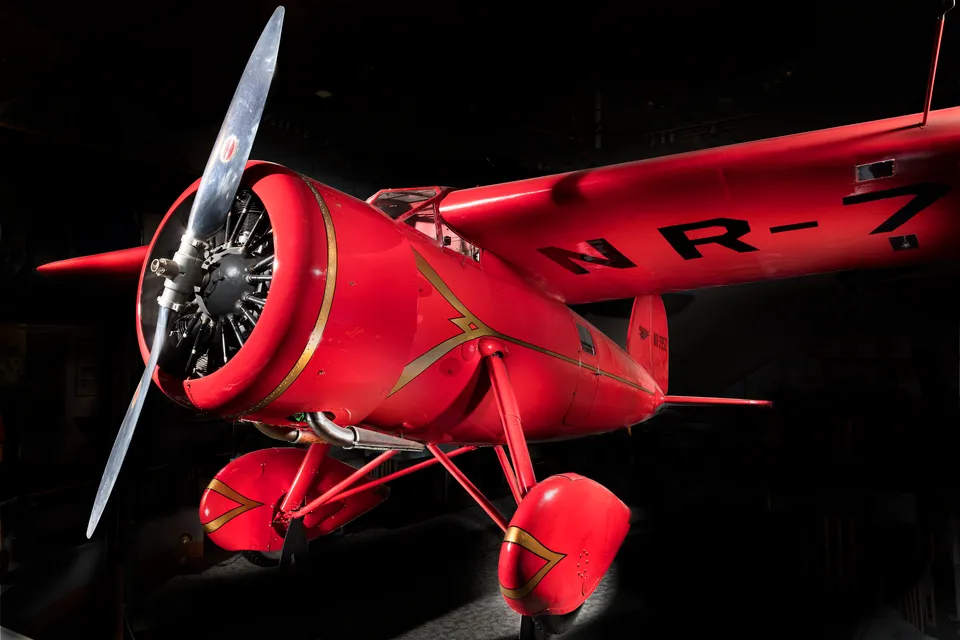
The Lockheed Vega 5B Earhart flew alone across the Atlantic in 1932 (Smithsonian National Air and Space Museum)

Smithsonian Institution · CC0 · Source

On the evening of 20 May 1932, the fifth anniversary of Lindbergh’s flight, Earhart took off alone from Harbour Grace, Newfoundland, in a single-engined Lockheed Vega 5B. Through the night ice formed on the wings, her altimeter failed and flames leaked from the exhaust. Abandoning her plan to reach Paris, she made for the nearest land and after 14 hours 56 minutes came down in a pasture at Culmore, near Derry in Northern Ireland.

When a startled farmhand asked where she had come from, she is said to have answered, “From America.” She was the first woman, and only the second person after Lindbergh, to fly the Atlantic alone, and the first woman awarded the Distinguished Flying Cross.
The map in 1932

OpenFreeMap © OpenMapTiles © OpenStreetMap contributors

States and rulers at the time
United States — President Herbert Hoover
Great Britain · destination
Places
Culmore, Northern Ireland

People

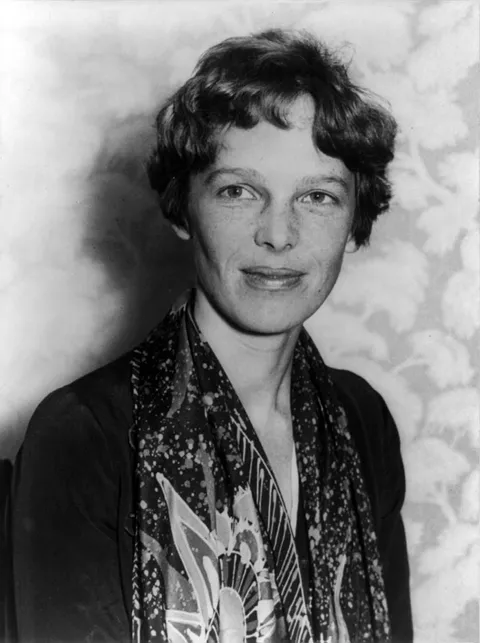
  • Amelia Earhart1897 – 1937

    key figure · American aviator, the first woman to fly solo across the Atlantic (1932), who vanished over the Pacific in 1937 while flying around the world near the equator

Before and after

Later
1932 Economic Blocs

Themes that include this event

  • Amelia Earhart1897 – 1937

    From her first ride in an aeroplane to the first solo Atlantic flight by a woman and her disappearance over the Pacific on a flight around the world — the life of an aviator who widened the paths of the sky