Founding of the English and Dutch East India Companies
Also called: East India Company, Dutch East India Company, VOC, Vereenigde Oostindische Compagnie
England in 1600 and the Netherlands in 1602 founded East India Companies holding monopolies of Asian trade. The Dutch company, the first joint-stock company with tradable shares, controlled the spice trade from its base at Batavia.
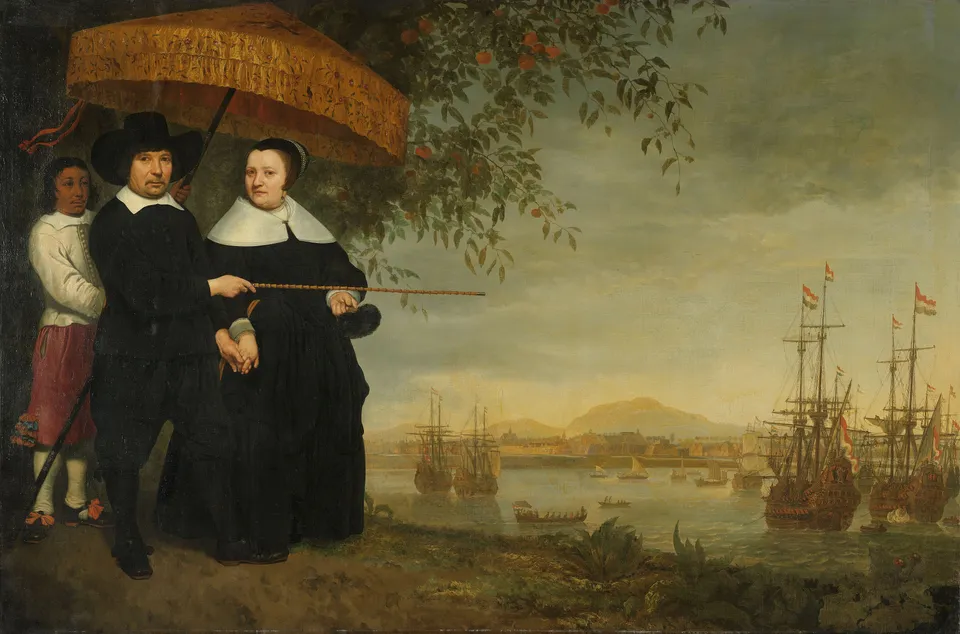
At the end of the 16th century England and the Netherlands broke into the Asian sea routes opened by Portugal and Spain. On 31 December 1600 Elizabeth I granted a London merchants’ East India Company a monopoly of Asian trade, and in 1602 the Dutch merged several trading companies into the United East India Company (VOC). The VOC raised capital from many investors and let its shares be traded on the Amsterdam exchange — the first joint-stock company of its kind — and it even had the power to make treaties and keep troops.
In 1619 the VOC made Batavia (today’s Jakarta) on Java its base, monopolised the spice trade of the Moluccas and set up trading posts on Taiwan and at Dejima in Nagasaki. After English traders were executed at Amboyna in 1623, the English East India Company turned to India, establishing bases at Madras, Bombay and Calcutta, and after the Battle of Plassey in 1757 it became a ruling power there.
The East India Companies laid the foundations of the Commercial Revolution and modern capitalism. In 1653 the VOC sailor Hendrick Hamel was shipwrecked on Jeju Island; the report he wrote after his escape introduced Joseon to Europe.