Completion of the Eiffel Tower
A 300-metre iron tower built for the Paris Exposition Universelle marking the centenary of the French Revolution was completed — for forty years the tallest structure in the world.
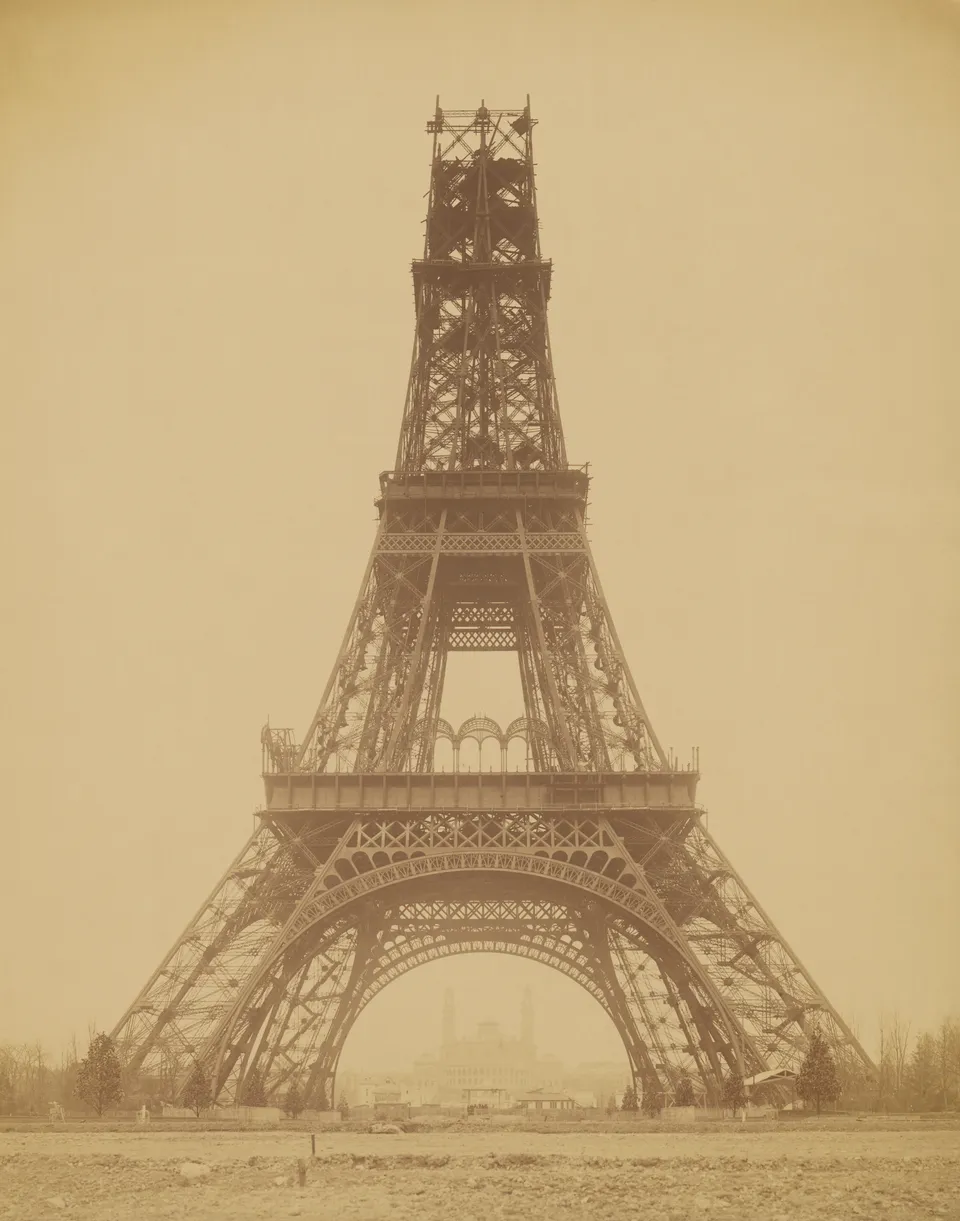
Louis-Émile Durandelle · Public domain · Source
The 1889 Exposition Universelle in Paris celebrated the centenary of the French Revolution. Gustave Eiffel’s company, building to a design by the engineers Maurice Koechlin and Émile Nouguier, joined more than 18,000 iron parts with 2.5 million rivets in two years and two months from January 1887 to raise a 300-metre tower, and hoisted the flag at the top on 31 March 1889.
During construction prominent artists published a protest that it would disfigure Paris, and the tower was due to be dismantled after twenty years. It survived because it proved useful as a radio antenna, and it remained the tallest structure in the world until the Chrysler Building rose in New York in 1930. Today it is the symbol of Paris, visited by some six million people a year.