Bacon and Descartes — Empiricism and Rationalism
Also called: Empiricism, Rationalism, Novum Organum, Discourse on the Method
Bacon’s Novum Organum (1620) championed induction, finding laws through observation and experiment, while Descartes’ Discourse on Method (1637) set out deduction from certain first principles, opening the two main streams of modern philosophy.
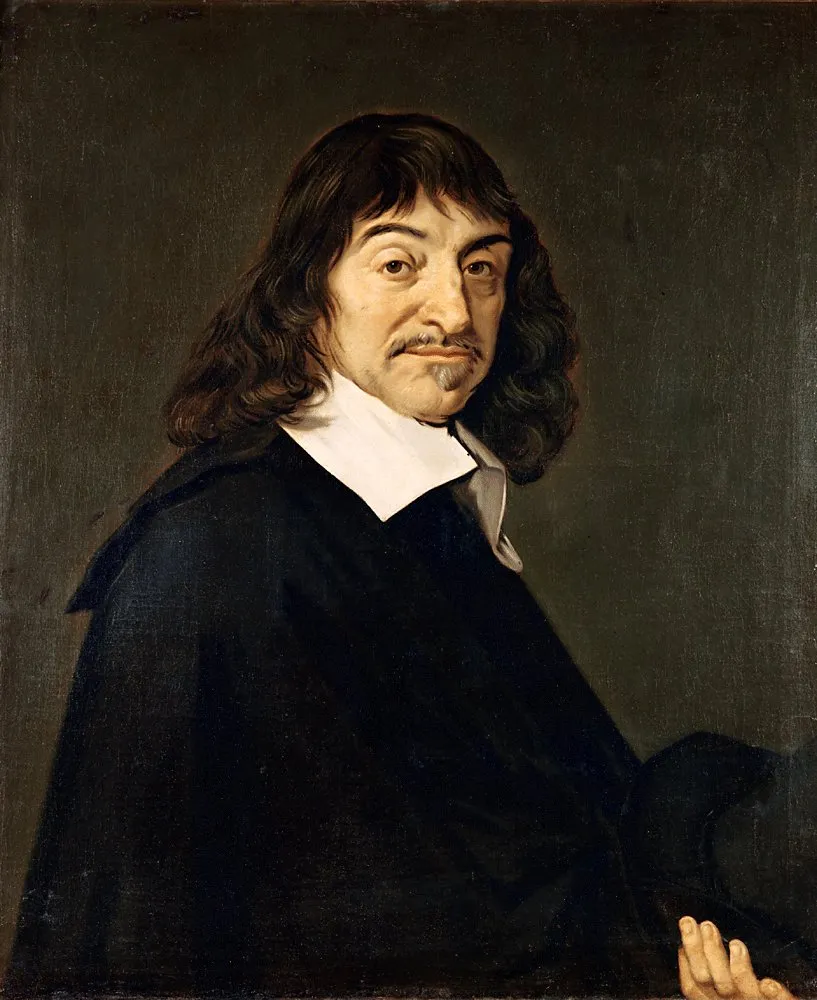
After Frans Hals · Public domain · Source
The Scientific Revolution raised anew the philosophical question of how truth is to be known. In his Novum Organum the Englishman Francis Bacon urged that the four idols that cloud human judgement — of the tribe, the cave, the marketplace and the theatre — be cast aside, and championed induction, gathering many observations and experiments to find general laws. Known for the saying “knowledge is power”, he opened the way to empiricism, a current continued by Locke and Hume.
The Frenchman Descartes, living in the Dutch Republic, published his Discourse on Method at Leiden. Doubting everything, he concluded that he could not doubt the doubting self — “I think, therefore I am” — and from this certain principle built a deductive method that reasons forward like mathematics. This rationalism was carried on by Spinoza and Leibniz, and in the 18th century Kant brought the two streams together.