Philip IV Summons the Estates General
Also called: Estates General of 1302, Outrage of Anagni
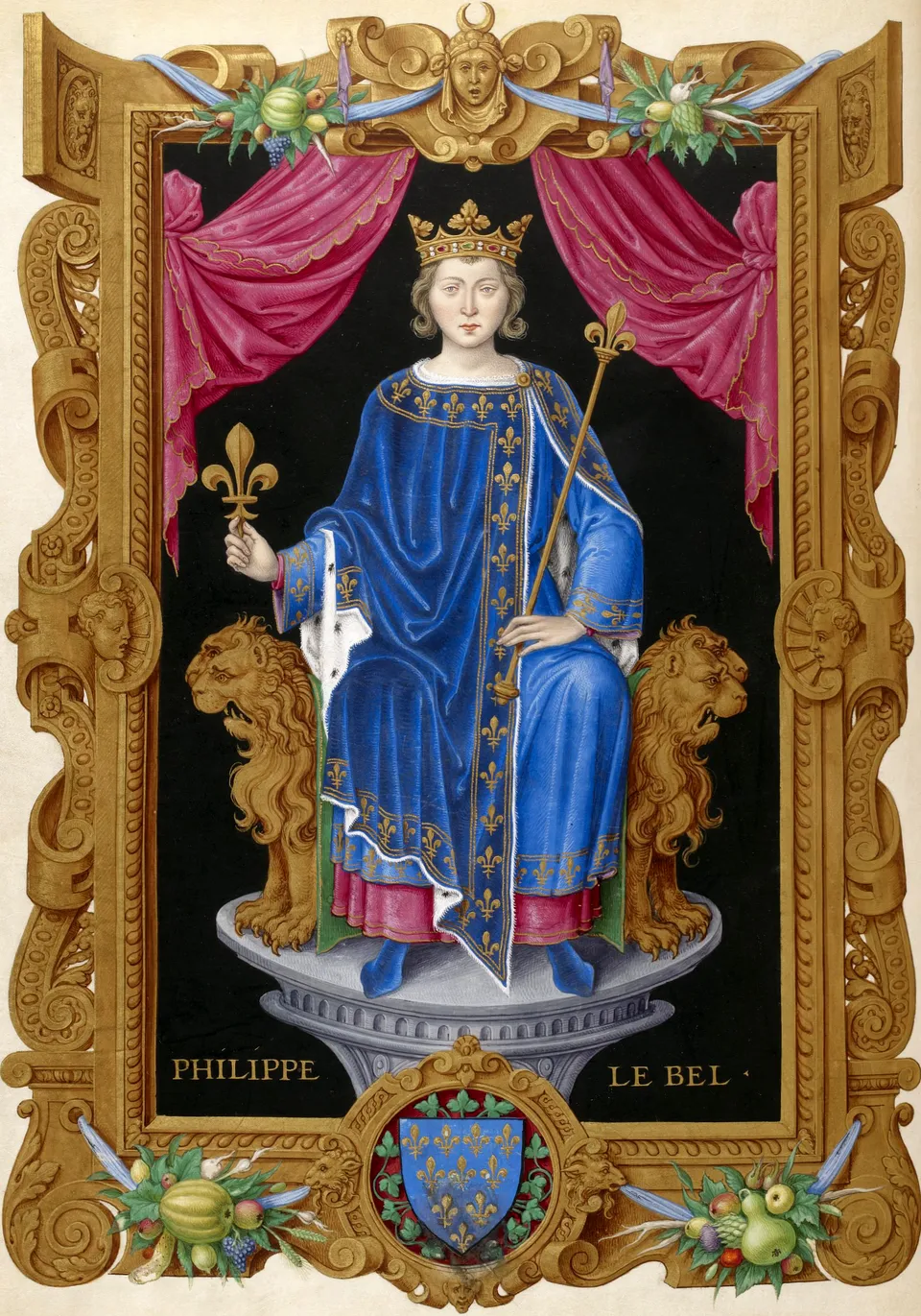
In 1302 King Philip IV of France, to stand against Pope Boniface VIII, gathered representatives of the clergy, nobility and commons in the first Estates General.
Unknown author · Public domain · Source
To pay for wars with England and Flanders, Philip IV taxed the clergy as well. When Pope Boniface VIII forbade this and claimed that the pope stood above all secular power, Philip on 10 April 1302 gathered the clergy, the nobility and representatives of the towns in Notre-Dame de Paris and won their support. This was the beginning of the Estates General, France’s assembly of estates.
In November the pope reasserted papal supremacy in the bull Unam Sanctam, but in September 1303 the king’s minister Nogaret seized him at his residence at Anagni in Italy (the Anagni incident). Released, the pope died a month later. The episode showed papal power broken and royal power on the rise. The Estates General thereafter met only when the king needed it and never gained the strength of the English Parliament; it would meet again in 1789, on the eve of the French Revolution.