Fashoda Incident
Also called: Fashoda Crisis
British forces pushing north–south across Africa and French forces pushing east–west met at Fashoda in Sudan. France backed down, war was avoided, and the two later came to terms.
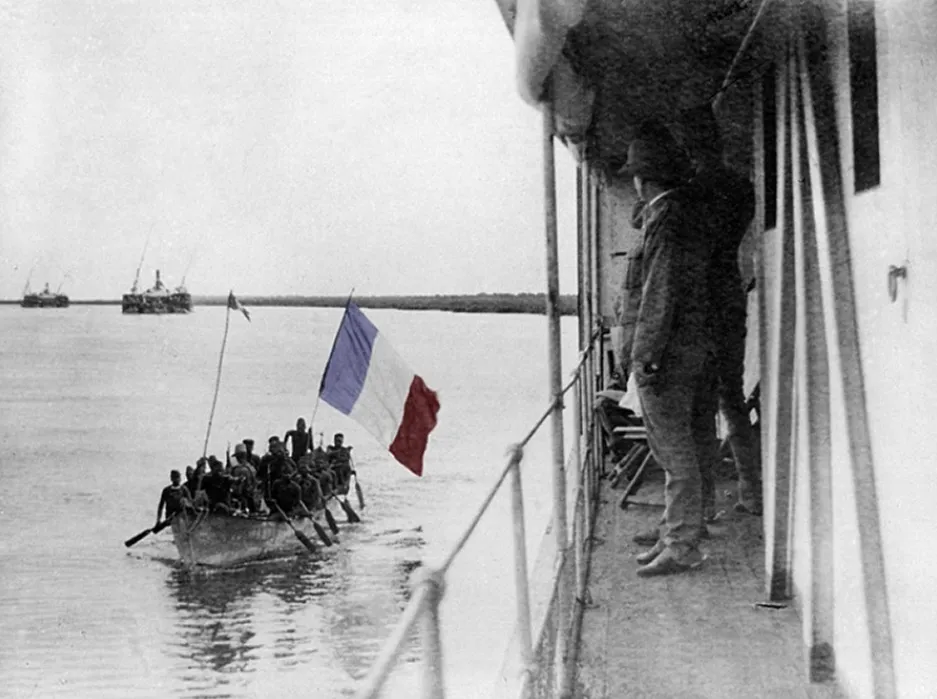
Unknown, 1898 · Public domain · Source
Having taken Egypt, Britain pursued a north–south line from Cairo to the Cape, while France aimed at an east–west line from West Africa to Djibouti. In Sudan, between them, Muhammad Ahmad had proclaimed himself the Mahdi (the redeemer) in 1881; his movement took Khartoum in 1885 and killed the British general Gordon. On 2 September 1898 Kitchener’s Anglo-Egyptian army destroyed the Mahdist army with machine guns at Omdurman.
Meanwhile Marchand’s French expedition, after marching nearly two years from the Congo, raised the French flag at Fashoda on the upper Nile in July 1898, and in September Kitchener’s flotilla arrived and the two forces faced each other. The crisis brought them to the brink of war, but France, shaken by the Dreyfus affair at home, withdrew in November. Sudan became an Anglo-Egyptian condominium, and in the Entente Cordiale of 1904 the two countries recognized each other’s positions in Egypt and Morocco.