Franco-Prussian War and the Founding of the German Empire
Also called: German unification, Proclamation of the German Empire, Blood and iron, Zollverein, Austro-Prussian War
Bismarck's Prussia defeated France and in 1871 proclaimed the German Empire in the Hall of Mirrors at the Palace of Versailles. France lost Alsace-Lorraine.
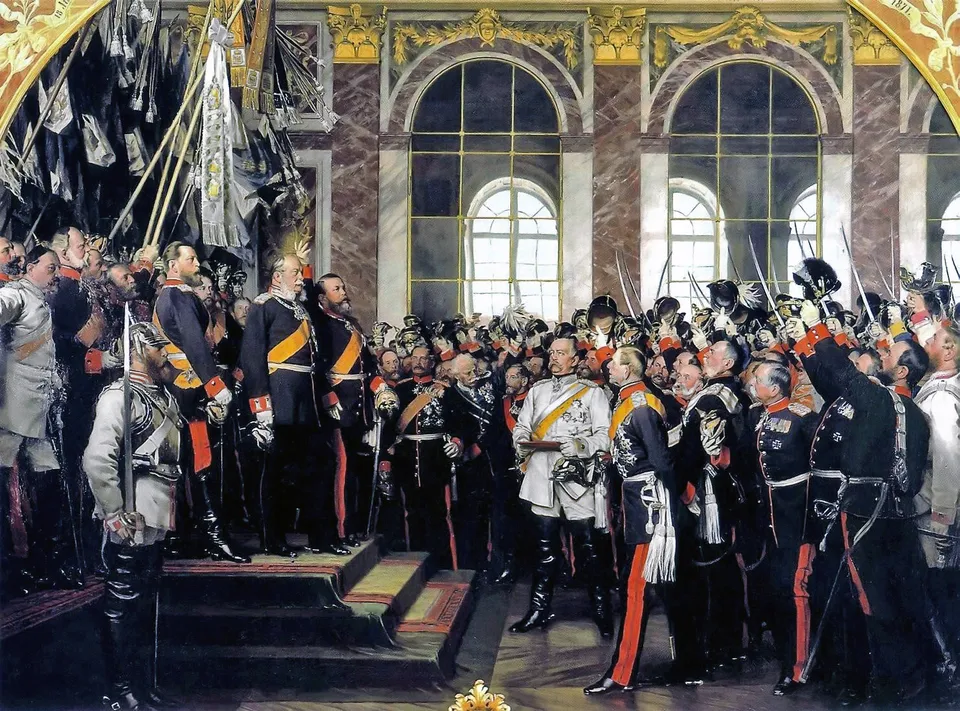
Anton von Werner · Public domain · Source
The Prussian-led customs union (Zollverein) of 1834 had first bound the German states together economically, but the Frankfurt Parliament’s bid for unity failed in 1848. Becoming Prussian minister-president in 1862, Bismarck declared that the great questions of the day would be decided “not by speeches and majority decisions … but by iron and blood” and built up the army. Prussia defeated Denmark (1864) and Austria (1866) in turn and formed a North German Confederation without Austria (the Lesser German solution).
Amid a quarrel with France over the Spanish succession, Bismarck published an edited version of the Ems telegram, and France declared war on 19 July 1870. German forces, joined by the southern states, captured Napoleon III at Sedan on 2 September; in Paris the Second Empire fell and a republic was proclaimed. With Paris under siege, Wilhelm I was proclaimed German Emperor in the Hall of Mirrors at Versailles on 18 January 1871.
By the Treaty of Frankfurt in May France ceded Alsace and part of Lorraine and paid an indemnity of five billion francs. The German Empire emerged as the leading power on the Continent, while French resentment over the lost provinces sowed rivalries that ran down to the First World War.