Gabo Reform
A deliberative council abolished the class system and the civil service exam and overhauled government; the cabinet of Kim Hong-jip led it under Japanese pressure.
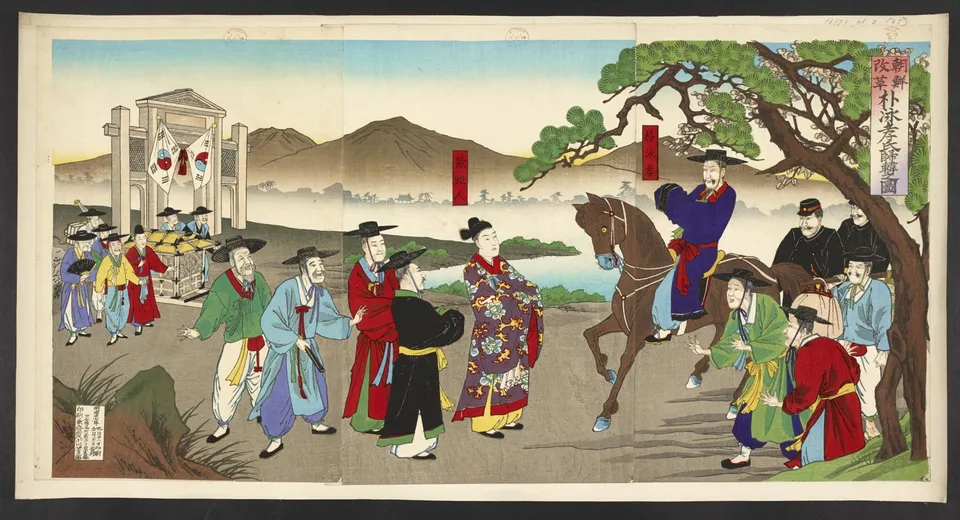
Unknown author · Public domain · Source
As the Donghak peasants pressed for reform, the government set up its own reform office. But Japanese troops occupied Gyeongbokgung, put the Daewongun forward as a figurehead and installed a cabinet under Kim Hong-jip, with the Gungguk Gimucheo, a deliberative council above the regular government, driving reform (the first Gabo Reform).
It replaced the Qing era name with a count of years from the dynasty’s founding, separated royal household affairs from state affairs under a new Ministry of the Royal Household, reorganised the six ministries into eight, and abolished the civil service examination. Finances were unified under the Ministry of Finance, with a silver standard, taxes paid in money and standard weights and measures. Public and private slavery and the class system were abolished, along with collective punishment of relatives; early marriage was banned and widows were allowed to remarry.
Gaining the upper hand in the war, Japan dissolved the council and pushed a second round under a Kim Hong-jip–Park Yeong-hyo coalition based on the 14-article Hongbeom, followed after the queen’s murder by the Eulmi Reform (the third round). A modern reform that met some peasant demands, it was carried out under Japanese pressure, neglected the military and failed to win popular support.
