Politics8th lunar month, 1895 – February 1896 (topknot decree: 15th day of the 11th lunar month, 1895 / 30 December)(Lunar)

Eulmi Reform and the Topknot Decree

The Kim Hong-jip cabinet installed after the queen’s assassination adopted the solar calendar, the era name Geonyang, smallpox vaccination and primary schools — and ordered men to cut off their topknots.
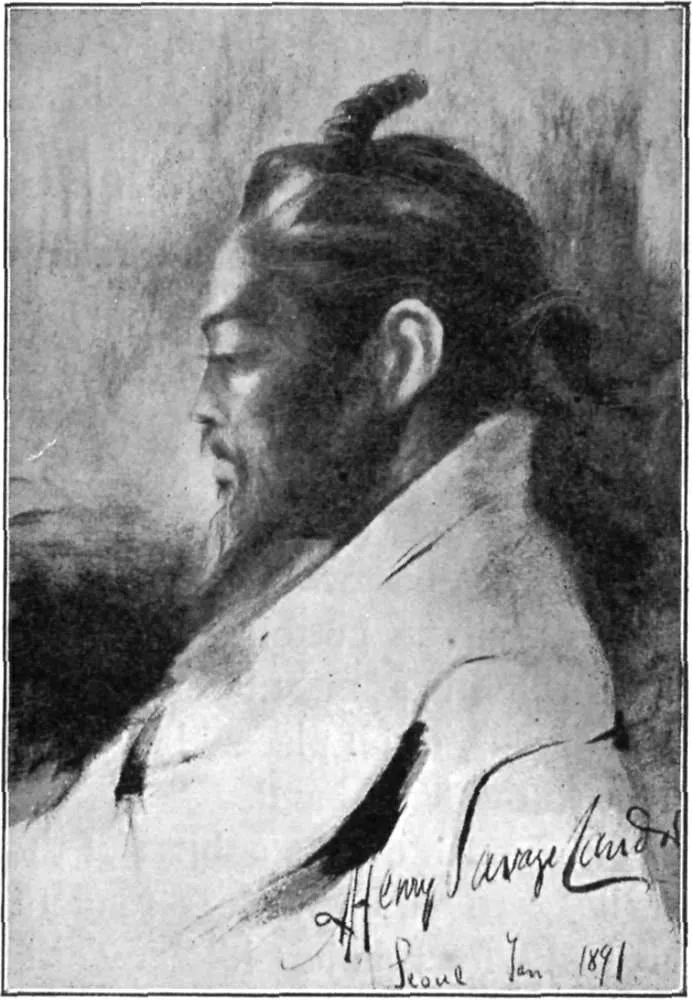
A Korean man's topknot, which the 1895 haircut edict ordered cut — sketch by Savage-Landor, 1891

A. Henry Savage-Landor · Public domain · Source

After the Triple Intervention weakened Japan, Joseon leaned toward Russia; Japan responded with the murder of the queen, drove out the pro-Russian faction and pushed reform again (the third Gabo Reform, or Eulmi Reform). The 17th day of the 11th lunar month of 1895 became 1 January 1896 under the solar calendar, with the new era name Geonyang. Vaccination and primary schools were introduced, the postal service reopened, and new guard units were stationed in the capital and provinces.

The topknot decree enraged scholars and commoners, who held that "body, hair and skin are received from one’s parents". Choe Ik-hyeon declared, "You may cut off my head, but not my hair." The assassination and the decree set off the Eulmi righteous armies, and when the king fled to the Russian legation the next year the cabinet fell and the reforms stopped.

The map in 1895

OpenFreeMap © OpenMapTiles © OpenStreetMap contributors

States and rulers at the time
Joseon — Gojong
Japan — Emperor Meiji
Places
Gyeongbokgung

People

  • Kim Hong-jip1842 – 1896

    leader · Prime minister who led the Gabo Reform; killed by a crowd after the king fled to the Russian legation

  • Gojong1852 – 1919

    monarch · Twenty-sixth king of Joseon and first emperor of the Korean Empire

  • Choe Ik-hyeon1833 – 1907

    related figure · Confucian loyalist whose memorials toppled the Daewongun and opposed opening to Japan; raised a righteous army in 1906 and died in captivity on Tsushima

Before and after

Themes that include this event

  • Military Systems Through the AgesAD 685 – 1907

    From the Nine Oath Banners to the Two Armies and Six Guards, the Five Commands and garrison system, the Five Army Camps and the Board of Marshals — armies rebuilt at every crisis