Culture1365–1374

Tombs of King Gongmin and Queen Noguk (Hyeonneung and Jeongneung), Kaesong

Twin tombs of King Gongmin and Princess Noguk. Gongmin himself built his queen’s tomb, and its zodiac retaining stones and civil and military statues became the model for Joseon royal tombs.
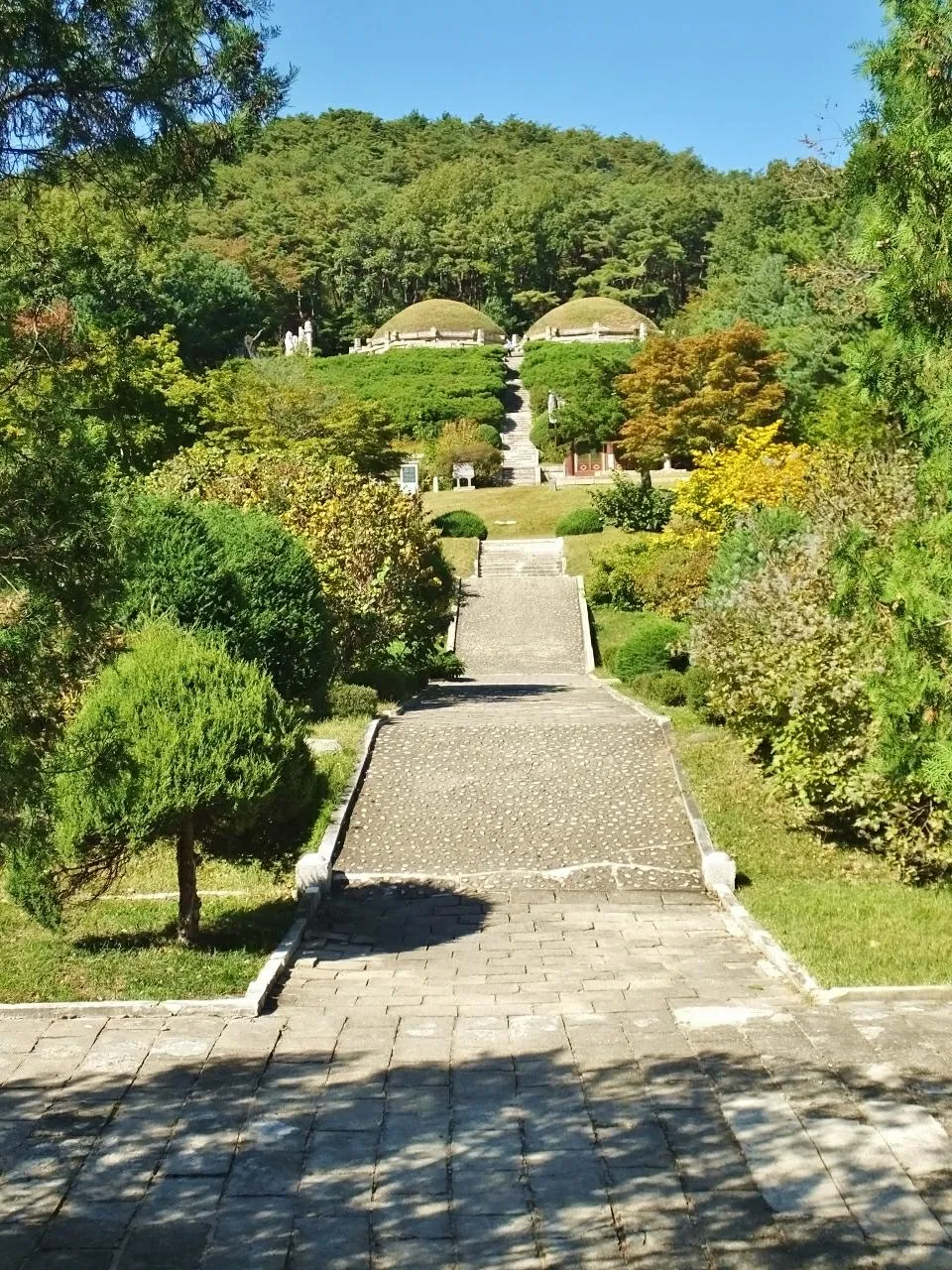
Tombs of King Gongmin, Kaesong — Hyeonneung (Gongmin) and Jeongneung (Princess Noguk) side by side

David Clayton Ellsworth · CC BY-SA 4.0 · Source

When Princess Noguk died in childbirth in 1365, King Gongmin built her tomb, Jeongneung, at the foot of Mt. Bongmyeong west of Kaesong, and beside it his own, Hyeonneung. He was buried there in 1374. The two mounds stand side by side.

Each mound is ringed with retaining stones carved with the twelve zodiac guardians, and stone railings, lanterns, civil and military officials, rams and tigers are set around them. Carrying on the retaining-stone style of Unified Silla royal tombs under Yuan influence, they are the most ornate and best preserved of Goryeo’s royal tombs and became the model for those of Joseon. In 2013 they became part of the UNESCO World Heritage Site "Historic Monuments and Sites in Kaesong".

The map in 1365

OpenFreeMap © OpenMapTiles © OpenStreetMap contributors

States and rulers at the time
Goryeo — King Gongmin

People

  • King Gongmin1330 – 1374

    related figure · Thirty-first king of Goryeo, who led anti-Yuan reforms, recovered the Ssangseong Commandery and backed Sin Don’s reforms

Before and after

Themes that include this event

  • Changes in Tombs2000 BC – 1374

    From dolmens to the tomb of King Gongmin — stone-mound, stone-mound wooden-chamber, stone-chamber and brick tombs, and how burial changed by kingdom and age

  • Intangible and World Heritage2000 BC – 1850

    From the dolmens to Namhansanseong on the World Heritage List, from Jongmyo ritual music to ssireum on the Intangible Heritage lists — where each came from and when it was inscribed

  • GaeseongAD 901 – 2003

    From Wang Geon, lord of Songak, to the Kaesong Industrial Complex — Gaegyeong, Goryeo’s capital for five centuries, and home of the Song merchants