Goryeo Plain Celadon
Also called: Pure celadon, Goryeo celadon
Influenced by Song celadon, Goryeo potters made clear blue-green plain celadon in the 11th century, reaching a peak in the early 12th century praised as “kingfisher colour”.
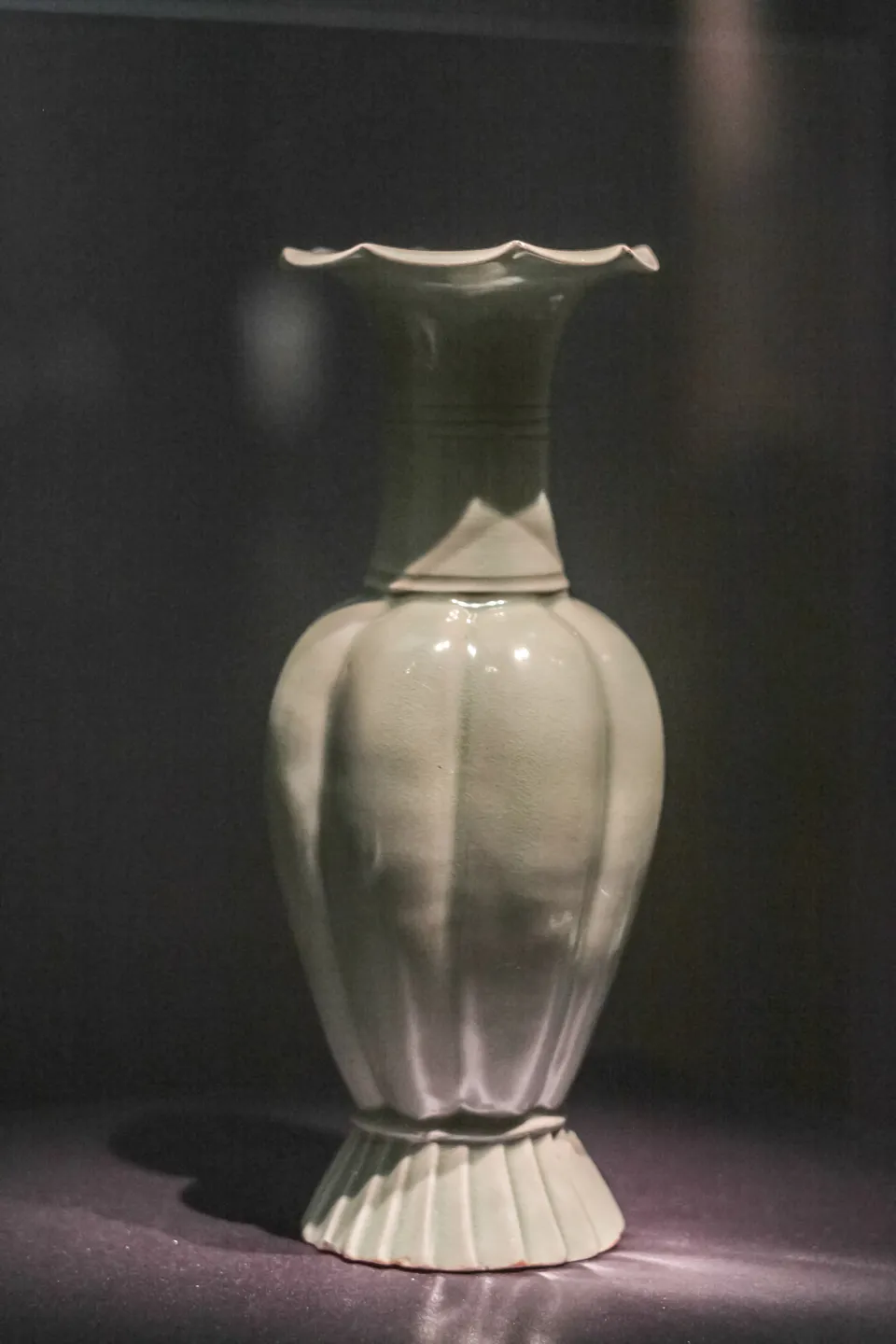
Eggmoon · CC BY-SA 3.0 · Source
Plain (sun) celadon relies on form and the colour of the glaze rather than inlay. Goryeo adopted the techniques of China’s Yue kilns around the 10th century and by the early 12th century achieved a clear, subtle blue-green. The Song envoy Xu Jing, who visited in 1123, called the colour “bisaek” (kingfisher green) in his Illustrated Account of Goryeo.
Vessels were shaped like melons, lotuses, lions, dragons and fish, and decorated by incising, carving in relief and openwork. Masterpieces include the melon-shaped bottle said to come from the tomb of King Injong, the openwork incense burner with the seven-treasures design and the dragon-fish ewer — all National Treasures. Gangjin and Buan in Jeolla were the main kiln centres. Inlaid celadon followed in the mid-12th century.