Gwangmu Reform
On the principle of "old ways as the root, new ways for reference", the Korean Empire strengthened the emperor’s power and pressed land surveys and title deeds, industry and modern infrastructure.
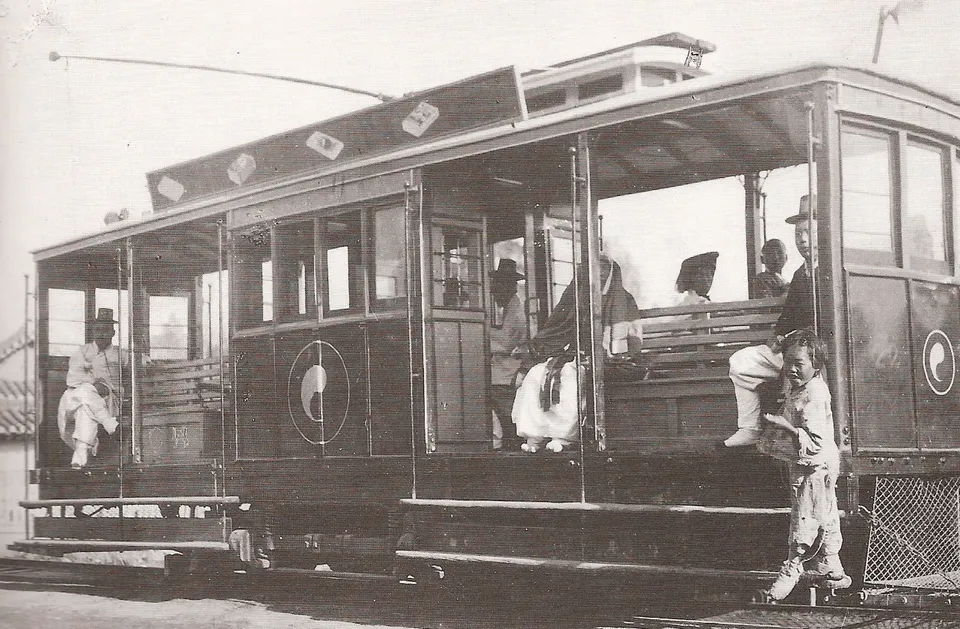
Unknown author · Public domain · Source
Gojong created a Supreme Military Council to command the army himself and expanded the guards in Seoul and the provincial garrisons. A land survey office (1898) measured the land, and a land title office (1901) issued modern deeds of ownership (jigye). The Royal Treasury took over revenue from mines and red ginseng to build up the crown’s finances.
The state encouraged companies in textiles, railways, shipping and mining and opened commercial and technical schools. In 1899 streetcars began running in Seoul and the Seoul–Incheon railway opened; telephones reached the palace in 1898. A treaty of 1899 put relations with Qing on an equal footing, an administrator, Yi Beom-yun, was appointed for Gando in 1903, and Imperial Decree No. 41 (1900) raised Ulleungdo to Uldo County with jurisdiction over Seokdo (Dokdo).
The reform centred on imperial power, suppressed the civil-rights movement, lacked money, faced foreign interference, and was cut short by the Russo-Japanese War.
